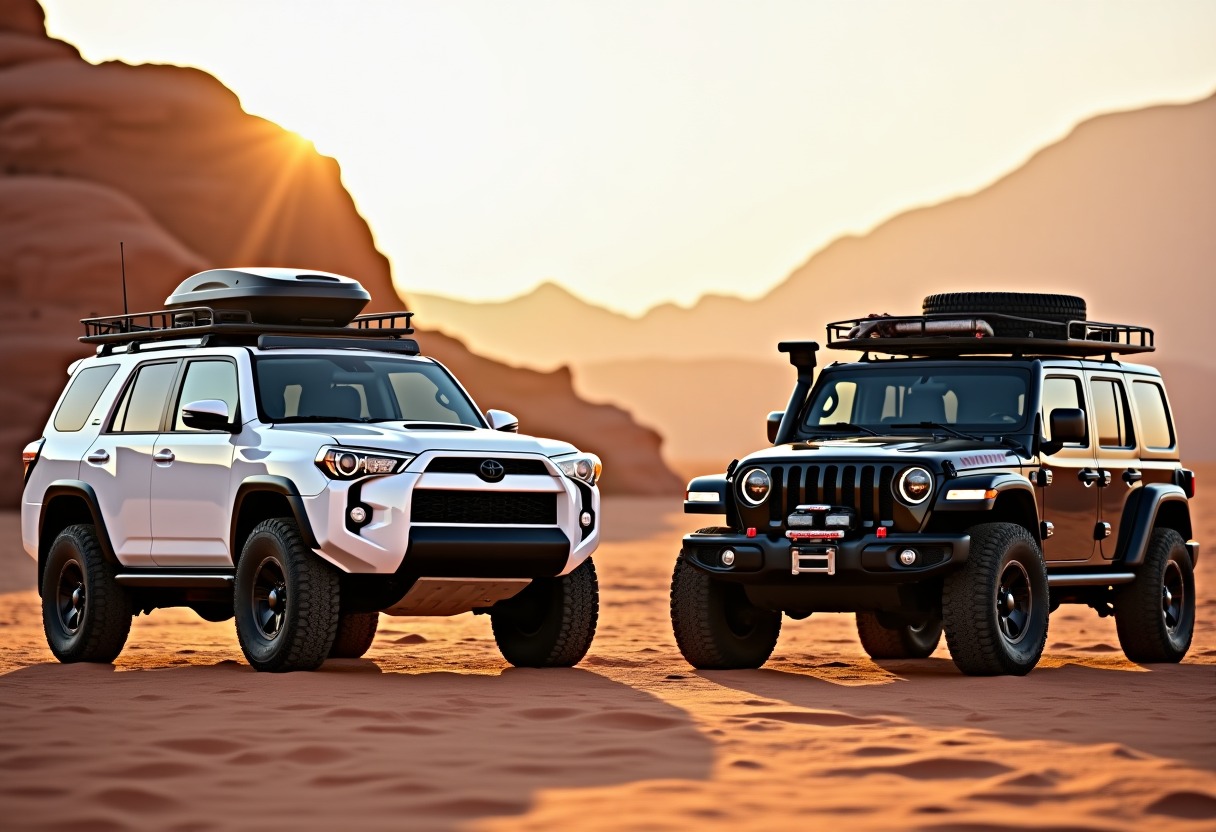
Both the Toyota 4Runner and Jeep Wrangler dominate overland builds, but they solve the challenge from completely different angles. One prioritizes bulletproof reliability for remote expeditions, while the other offers unmatched modularity for technical terrain.
Why This Comparison Matters More Than Ever
The overland community has settled into two distinct camps around these platforms, and the choice fundamentally shapes your build philosophy. 4Runner enthusiasts typically focus on long-distance reliability and payload optimization, while Wrangler builders prioritize technical capability and modular upgrades.
The Toyota 4Runner has maintained essentially the same platform architecture since 2010, which creates a mature aftermarket but limits modern tech integration. The current generation uses a 4.0L V6 producing 270 hp and 278 lb-ft of torque, paired with a 5-speed automatic transmission that Motor Trend consistently rates as reliable but outdated.
The Wrangler JL platform, introduced in 2018, offers three engine options: the base 3.6L Pentastar V6 (285 hp), the 2.0L turbo four-cylinder (270 hp), and the 3.0L EcoDiesel V6 (260 hp, 442 lb-ft). This variety allows builders to optimize for specific use cases rather than working around a single powerplant.
Capability and Terrain Performance
The 4Runner's strength lies in its predictable, confidence-inspiring behavior across varied terrain. The Kinetic Dynamic Suspension System (KDSS) on higher trims automatically disconnects sway bars, providing 9.6 inches of ground clearance and approach/departure angles of 33/26 degrees. The full-time 4WD system with locking center differential excels in low-traction situations like sand and snow.
Wrangler capability varies dramatically by configuration. Base Sport models with stock suspension offer modest 8.7 inches of ground clearance, but Rubicon variants jump to 10.8 inches with 44/37-degree approach/departure angles. The Rubicon's front and rear Dana 44 axles with electronic lockers, disconnecting sway bars, and 4:1 transfer case create a different class of technical capability straight from the factory.
The Wrangler's removable doors and fold-down windshield provide unmatched visibility for spotting lines through technical sections. However, this modularity creates more potential failure points and requires additional weatherproofing for serious expedition use.
| Comparison Factor | Toyota 4Runner | Jeep Wrangler | |----------------------|-------------------|-------------------| | Reliability Rating | Above average (4/5 J.D. Power) | Below average (2/5 J.D. Power) | | Cargo Capacity | 47.2 cu ft (seats down) | 31.7 cu ft (4-door, seats down) | | Payload Capacity | 1,440-1,985 lbs | 1,000-1,350 lbs | | Ground Clearance | 9.6 inches (KDSS models) | 8.7-10.8 inches (varies by trim) |
Modification Ecosystem and Build Costs
The 4Runner's mature platform creates price stability in the used parts market but limits cutting-edge innovation. → Shop Toyota 4Runner lift kits on Amazon typically cost $800-2,500 for quality setups, with brands like Toytec and Old Man Emu dominating the space.
Suspension upgrades focus on improving the somewhat bouncy stock tune while maintaining Toyota's conservative approach to articulation. The lack of solid front axle means traditional lift kit concepts don't apply directly, but independent front suspension provides better on-road comfort for highway miles between trails.
Wrangler modification costs vary wildly based on goals. → Shop Wrangler suspension upgrades on Amazon range from $600 basic kits to $8,000+ long-arm systems with custom geometry correction. The solid axle platform accepts dramatic modifications that would compromise a 4Runner's reliability.
For specific Wrangler modifications, check our detailed guides on Best Jeep Wrangler Skid Plates 2026 and Best Jeep Wrangler Bumpers 2026 for protection upgrades, plus Best Jeep Wrangler Winches 2026 for recovery gear integration.
Long-Term Ownership Reality
4Runner ownership typically involves scheduled maintenance and occasional wear items. The 4.0L V6 runs 200,000+ miles with basic care, and parts availability remains excellent even for older generations. Insurance costs stay reasonable because theft rates are lower than Wranglers.
Wrangler ownership requires a different mindset. The removable components that create capability also create maintenance headaches. Door seals, soft top mechanisms, and electrical connections exposed to weather need regular attention. The JL platform improved electrical reliability over the JK, but still requires more frequent troubleshooting than the 4Runner.
Fuel economy heavily favors the 4Runner at 17/20 mpg (city/highway) versus the Wrangler's 18/23 mpg for the base V6. However, real-world overland fuel consumption depends heavily on modifications, with lifted and armored vehicles of both platforms typically seeing 12-16 mpg.
Essential Gear Integration
Both platforms excel at integrating essential overland equipment, but approach it differently. → Shop overland roof racks on Amazon for either vehicle, but consider weight distribution carefully. The 4Runner's higher payload capacity better handles roof-mounted gear without affecting handling.
Recovery gear integration follows each platform's philosophy. → Shop skid plate protection on Amazon is essential for both, but Wrangler installations often require more custom work due to the variety of configurations available.
Winch mounting proves more straightforward on Wranglers due to their flat front-end design and abundant aftermarket bumper options. 4Runner winch integration requires more careful planning around the curved front fascia and integrated approach lighting. → Shop recovery winches on Amazon with appropriate mounting systems for your chosen platform.
For comprehensive Wrangler setup guidance, reference our complete Best Jeep Wrangler Mods and Best Jeep Wrangler Accessories 2026 guides.
Advanced Build Considerations Most Guides Skip
Weight distribution becomes critical on both platforms but for different reasons. The 4Runner's rear-heavy design benefits from front-mounted accessories like winches and steel bumpers, while the Wrangler's better balance allows more flexibility in gear placement.
Electrical system capacity differs significantly. The 4Runner's alternator produces 130 amps, adequate for basic accessories but marginal for high-draw items like air compressors and fridges without upgrades. Wrangler alternators vary by engine option, with the EcoDiesel's 180-amp unit supporting more auxiliary equipment.
Center of gravity management affects each platform's stability differently. The 4Runner's lower starting point means moderate lifts don't dramatically impact stability, while the Wrangler's higher center of gravity requires more careful consideration of lift height and tire size combinations.
Communication equipment integration favors the 4Runner due to its enclosed cab design, which provides better RF shielding and mounting points for radio equipment. Wrangler soft-top configurations can create challenges for permanent antenna installations and weather protection for sensitive electronics.
FAQ
Which platform offers better reliability for remote expeditions? The Toyota 4Runner provides superior reliability for remote expeditions, based on both manufacturer data and user reports from overlanding forums. The single-engine option eliminates complexity, while Toyota's conservative engineering approach prioritizes longevity over performance. The 4.0L V6 has a proven track record of 200,000+ mile service life with proper maintenance, and parts availability remains excellent even in remote locations due to Toyota's global service network.
How do modification costs compare between the two platforms? 4Runner modification costs generally run 20-30% higher than equivalent Wrangler upgrades due to lower production volumes and more complex independent front suspension requirements. However, 4Runner modifications typically retain value better and require less frequent replacement. Wrangler modifications offer more variety and aggressive capability gains, but the solid axle platform's popularity creates price competition that keeps basic upgrades affordable. Budget $3,000-5,000 for a capable overland build on either platform, with Wranglers offering more dramatic transformation potential for higher investments.
Which vehicle handles payload and cargo management better for overland trips? The 4Runner significantly outperforms the Wrangler in both payload capacity (1,440-1,985 lbs vs 1,000-1,350 lbs) and cargo volume (47.2 vs 31.7 cubic feet). This advantage becomes crucial for multi-week expeditions requiring water, food, spare parts, and camping equipment. The 4Runner's rear cargo area design also provides better organization options with flat loading surfaces and integrated tie-down points. Wrangler builders often require roof-mounted storage solutions that affect fuel economy and center of gravity.
How do the platforms compare for technical rock crawling versus long-distance touring? Wranglers excel at technical rock crawling due to superior approach/departure angles (44/37 degrees on Rubicon vs 33/26 degrees on 4Runner), shorter wheelbase options for maneuverability, and factory-available locking differentials front and rear. The solid axle design provides better articulation and easier modification for extreme terrain. However, 4Runners prove superior for long-distance touring due to more comfortable highway ride quality, better fuel economy, and proven reliability over extended mileage. The independent front suspension creates a more composed ride on mixed terrain typical of overland routes.
What are the real-world maintenance differences between these platforms? 4Runner maintenance follows predictable intervals with few surprises, typically requiring dealer service every 10,000 miles and major service (timing belt, water pump) around 90,000 miles. Parts costs are higher but failures are less frequent. Wrangler maintenance involves more frequent attention to weather seals, soft top mechanisms, and electrical connections, especially on models with removable doors. The variety of engine options in Wranglers creates different maintenance schedules, with the EcoDiesel requiring more specialized service but offering longer intervals between major services. Budget approximately 30% more annual maintenance costs for Wranglers due to higher complexity and exposure to elements.
The 4Runner builds a better expedition vehicle for reliability-focused overlanders, while the Wrangler creates a more capable technical platform for modification enthusiasts who prioritize trail performance over long-term dependability.
Some links on this page are affiliate links. We may earn a small commission if you purchase through them, at no extra cost to you.
As an Amazon Associate we earn from qualifying purchases. This article contains affiliate links; if you buy through them we may earn a small commission at no additional cost to you.