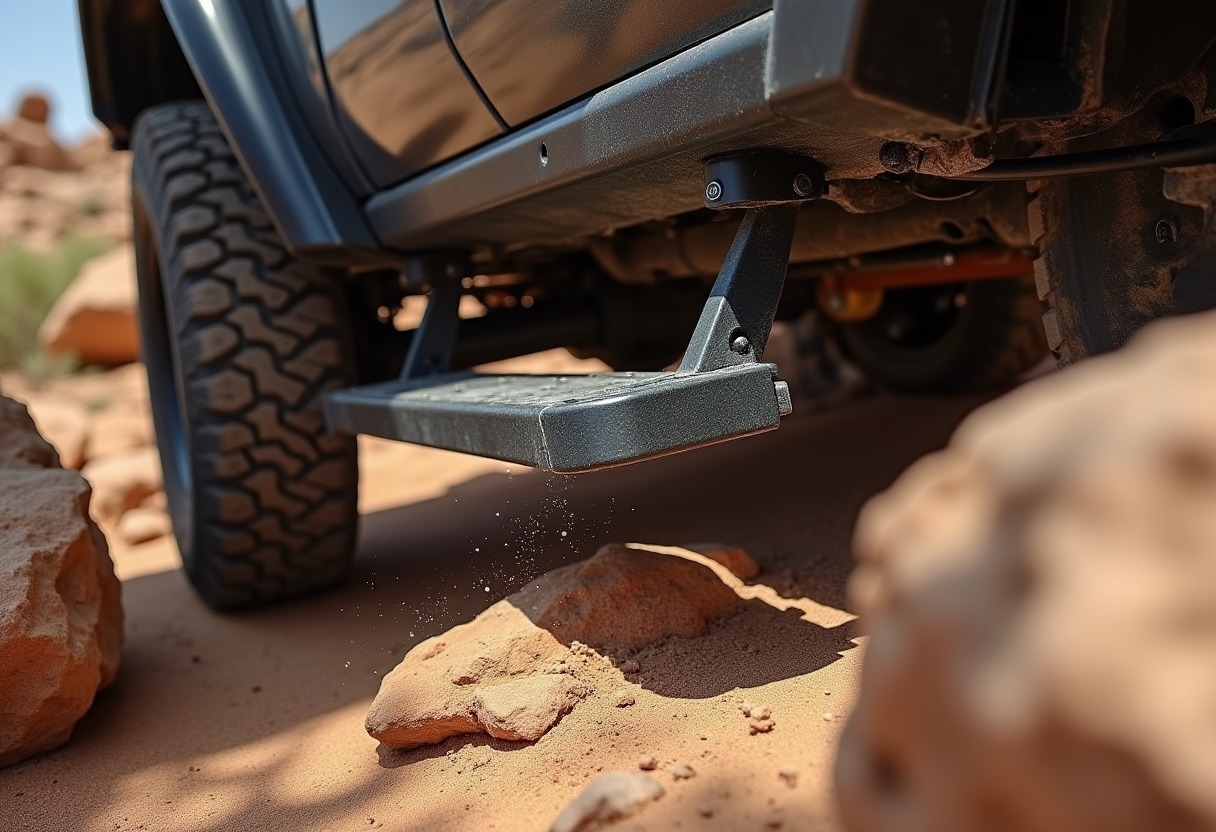
Your Ford Bronco's rocker panels are sitting ducks for trail damage. Rock sliders transform those vulnerable points into contact surfaces that can slide over obstacles without crushing your body panels or frame rails.
Why Rock Sliders Matter for Bronco Trail Protection
The 2021+ Ford Bronco brought serious off-road capability back to the mainstream, but Ford's engineering focus on capability didn't extend to rock protection. Stock running boards crumple under moderate rock contact, and bare rocker panels dent permanently from impacts that quality rock sliders absorb without issue.
Rock sliders mount to your Bronco's frame rails and extend below the body, creating a sacrificial contact surface. When you slide sideways across a boulder or ledge, the slider takes the hit instead of your expensive body panels. The best designs also function as recovery points and step surfaces for roof access.
Material choice affects everything: protection level, weight penalty, corrosion resistance, and long-term durability. Steel sliders offer maximum protection but add significant weight. Aluminum sliders reduce weight penalty while providing excellent protection for most trail scenarios.
Steel Rock Sliders: Maximum Protection at a Cost
Steel rock sliders deliver the highest protection level available. 3/16" or 1/4" steel construction withstands massive impacts that would deform aluminum options. When you're threading between tight rock walls or sliding down granite faces, steel's superior yield strength prevents permanent deformation.
Weight becomes the primary tradeoff. Quality steel sliders add 80-120 pounds to your Bronco, affecting fuel economy, suspension performance, and overall handling. Most steel options use mild steel construction with powder coat or paint finishes that require touch-ups after rock contact.
Corrosion resistance varies significantly between manufacturers. Basic powder coating chips easily, exposing bare steel to rust. Better options use marine-grade coatings or stainless steel construction that maintains appearance and structural integrity through years of trail abuse.
Steel sliders excel in technical rock crawling where repeated heavy impacts occur. The material's ability to bend without breaking prevents catastrophic failure that could leave you stranded. When damage does occur, steel welding repairs are possible in most locations with basic equipment.
→ Shop steel rock sliders on Amazon
Aluminum Rock Sliders: Balanced Performance for Most Users
Aluminum rock sliders provide 80-90% of steel's protection at roughly half the weight. Quality 6061-T6 aluminum construction offers excellent strength-to-weight ratios while resisting corrosion without coatings. Most aluminum sliders add 40-60 pounds to your Bronco.
The material's properties create different failure modes than steel. Aluminum dents rather than bends, maintaining structural integrity through impacts that would permanently deform thinner materials. Severe impacts can crack aluminum, but quality designs include reinforcement ribs that distribute loads effectively.
Aluminum's natural corrosion resistance eliminates the maintenance requirements of steel options. Anodized finishes provide additional protection while maintaining appearance through extended trail use. Scratches and scuffs blend into the material rather than exposing different-colored substrate layers.
Manufacturing precision tends to be higher with aluminum sliders. CNC machining and precision welding create tighter tolerances and better fit compared to many steel fabrications. This translates to reduced installation time and better integration with factory mounting points.
→ Shop aluminum rock sliders on Amazon
Material Comparison: Steel vs Aluminum Performance
| Factor | Steel Sliders | Aluminum Sliders | |--------|---------------|------------------| | Impact Protection | Excellent (bends vs breaks) | Very Good (dents vs cracks) | | Weight Addition | 80-120 lbs | 40-60 lbs | | Corrosion Resistance | Requires coating maintenance | Natural resistance | | Repair Capability | Field weldable | Requires specialized equipment | | Cost Range | $800-1500 | $600-1200 |
Top Ford Bronco Rock Slider Options
Tube-Style Sliders offer the lightest weight and lowest cost while providing basic protection. Round or rectangular tubing mounts to frame rails with simple brackets. These work well for light trail use but lack the surface area for effective rock sliding. Protection focuses on impact absorption rather than sliding capability.
Plate-Style Sliders feature continuous metal plates that excel at sliding over obstacles. The smooth bottom surface prevents hang-ups on protruding rocks while distributing loads across the entire structure. These provide the best protection for technical terrain but add more weight than tube designs.
Hybrid Designs combine tube frameworks with strategic plating. Front and rear sections use tubing to reduce weight, while the center section features a plate for primary contact zones. This approach balances protection with weight considerations for most trail scenarios.
Integrated Step Sliders include textured surfaces or brackets for stepping access to roof racks and storage. The step functionality requires stronger mounting and increased material thickness, adding weight but improving daily usability for overlanding setups.
Rock Sliders with Recovery Points incorporate rated recovery points or winch anchor tabs. These eliminate the need for separate recovery hardware while ensuring proper load distribution through your Bronco's frame. Critical for serious backcountry travel where self-recovery capability matters.
→ Shop Ford Bronco rock rails on Amazon
Professional Installation vs DIY Considerations
Frame rail access on the Ford Bronco requires removing plastic cladding and potentially lowering exhaust components. Most rock slider installations take 4-6 hours with basic tools, but frame mounting requires precise hole locations and proper hardware torque specifications.
Quality sliders include drilling templates or use existing factory mounting points to ensure proper alignment. Misaligned mounting creates stress concentrations that can crack frame rails under load. Professional installation eliminates measurement errors and ensures warranty coverage.
DIY installation saves $200-400 in labor costs but requires confidence with frame modifications. Once you drill mounting holes, mistakes become permanent and expensive to correct. Consider professional installation for your first slider upgrade, especially on newer vehicles under warranty.
Some manufacturers void warranties for DIY installations or require specific torque specifications and thread locker applications. Review installation requirements before purchasing to understand what you're committing to for proper installation and warranty coverage.
Frame preparation varies between manufacturers. Some require additional reinforcement plates or backing washers to distribute mounting loads. Others mount directly to factory points with minimal modification. Understanding these requirements helps choose options that match your comfort level and available tools.
Like the protective philosophy behind Best Jeep Wrangler Skid Plates 2026, rock sliders represent essential armor for serious trail work rather than cosmetic additions.
FAQ
Do rock sliders affect ground clearance on the Ford Bronco? Quality rock sliders typically extend 1-3 inches below the factory rocker panel line but shouldn't reduce actual ground clearance since they protect rather than replace the lowest points. The key measurement is departure angle - poorly designed sliders can extend too far rearward and catch on obstacles during steep climbs. Look for designs that tuck close to the body line and don't extend beyond the rear tire centerline. Most reputable manufacturers test departure angles to ensure their sliders don't compromise the Bronco's factory approach and departure capabilities.
Can I use rock sliders as jack points for tire changes? Most rock sliders can support jacking loads, but you need to verify the specific design's rating and mounting method. Sliders that mount to multiple frame points with backing plates typically handle jacking loads safely. Tube-style sliders with minimal mounting may not provide adequate support for the vehicle's weight concentrated at a single point. Always check with the manufacturer before using sliders as jack points, and consider carrying a proper jack pad that distributes loads across the slider's structure rather than concentrating force at one spot.
How do I maintain rock sliders after trail damage? Steel sliders require immediate attention to any coating damage to prevent rust formation. Clean off dirt and debris, then touch up scratches and chips with matching paint or coating. Aluminum sliders need less maintenance but benefit from periodic cleaning to remove embedded dirt that can cause abrasion. Inspect mounting hardware annually and retorque to specification since trail vibration can loosen bolts over time. Check for cracks around mounting points or stress concentrations, especially after heavy impacts that may have exceeded the material's limits.
Will rock sliders void my Ford warranty? Properly installed rock sliders shouldn't void your Ford warranty under the Magnuson-Moss Warranty Act, but damage caused by modification or improper installation isn't covered. Ford can deny warranty claims if they prove the aftermarket part caused the failure. Keep installation documentation and use quality products with proper mounting hardware. Professional installation provides additional protection since shops typically carry insurance for modification-related issues. Always inform your dealer about modifications during service visits to maintain transparency and avoid surprise warranty denials.
Do I need matching front and rear protection with rock sliders? Rock sliders protect the sides, but comprehensive protection requires front and rear armor as well. The sides take the most abuse in technical terrain, making sliders the highest priority for most trail scenarios. Front skid plates protect critical components like oil pans and transmission cases from direct impacts. Rear protection becomes important for departure angle clearance and fuel tank protection. Start with quality rock sliders, then add front and rear protection based on your typical terrain and risk tolerance. Each component protects different areas and failure modes.
Rock sliders represent the single most important armor upgrade for serious Ford Bronco trail use - choose steel for maximum protection or aluminum for the best balance of weight and capability.
Some links on this page are affiliate links. We may earn a small commission if you purchase through them, at no extra cost to you.
As an Amazon Associate we earn from qualifying purchases. This article contains affiliate links; if you buy through them we may earn a small commission at no additional cost to you.