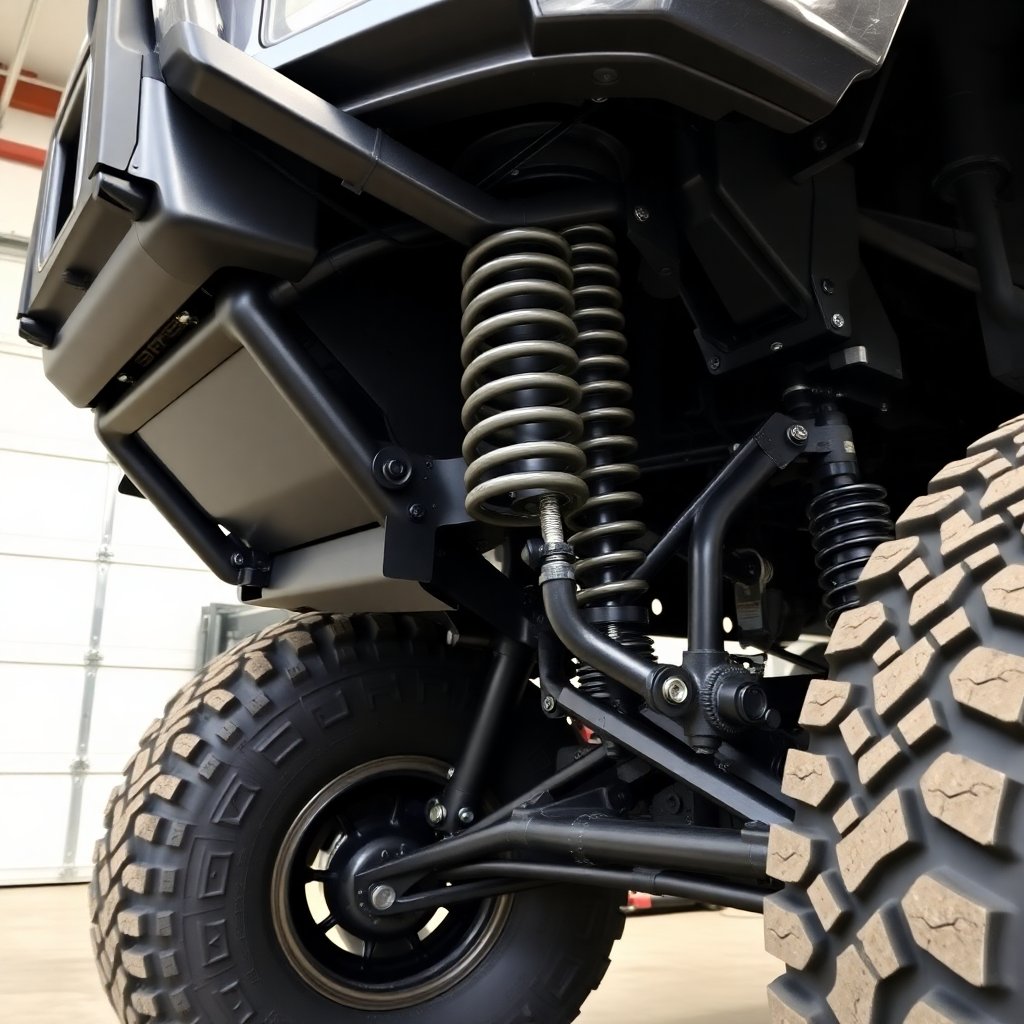
You hit an expansion joint at 50 mph, and suddenly the whole front end of your Jeep is shaking so violently the steering wheel is trying to rip out of your hands. The dash blurs. It feels like the axle is coming apart. Then you slow down below about 20 mph and it stops as abruptly as it started.
That is death wobble, and if you own a solid front axle rig long enough, there is a good chance you will meet it. It is terrifying, but it is not mysterious. Death wobble is a mechanical problem with mechanical causes, and once you know how to find the loose part, it is usually fixable in a weekend with hand tools.
This guide covers what causes it, how to diagnose it in your driveway, and the fix order that actually cures it instead of masking it.
Affiliate disclosure: As an Amazon Associate we earn from qualifying purchases. Some links below are affiliate links. They do not change what we recommend or what you pay.
What Death Wobble Actually Is
Death wobble is a self-sustaining oscillation of the front wheels and axle. A bump or road imperfection starts the front wheels shimmying, and instead of the suspension and steering damping that motion out, some looseness in the system lets it build on itself. The engineering family it belongs to is the same one behind speed wobble on motorcycles and shopping carts: a steered wheel with enough play and the right speed will start oscillating.
It is most common on vehicles with a solid front axle and a track bar, which is why Jeep Wranglers (JK and JL), Gladiators, older Cherokees (XJ), Ram and Ford Super Duty trucks, and some lifted rigs get it far more often than independent front suspension trucks like the Tacoma or 4Runner.
The key point: death wobble is almost never caused by one single dramatic failure. It is caused by a combination of worn or loose parts plus a trigger, like a pothole or expansion joint at speed.
Is It Dangerous?
Yes, potentially. Death wobble makes steering control difficult, and the shaking can be severe enough to alarm even experienced drivers. In most cases, slowing down firmly and in a straight line makes it stop. Do not slam the brakes or jerk the wheel.
If your rig has had a wobble episode, treat it as a sign that something in the front end needs attention before you drive at highway speed again. It is also worth checking the NHTSA recall lookup with your VIN, since manufacturers have issued steering and suspension related service actions on some models over the years.
The Usual Suspects
1. Track Bar and Track Bar Bushings
The track bar locates the front axle side to side. If its bushings are worn, the bolts are loose, or the mounting holes have wallowed out, the axle can shift side to side under load. That lateral play is the most common single cause of death wobble on Jeeps.
Watch for: clunking on bumps, a steering wheel that feels vague, and visible movement at the track bar ends during a dry steer test (more on that below).
2. Ball Joints
Worn ball joints let the knuckle move in ways it should not. On heavier rigs with big tires, ball joints wear faster than many owners expect.
3. Tie Rod and Drag Link Ends
Any play in the steering linkage ends adds slop that the wobble can feed on. Worn tie rod ends are a very common contributor.
4. Control Arm Bushings
Worn or torn control arm bushings, especially on the lower arms, let the axle shift fore and aft and change caster angle under braking or bumps.
5. Wheel Bearings / Unit Bearings
A loose or worn hub bearing allows the wheel to wobble on the axle. These can fail gradually and often go unnoticed until a wobble episode.
6. Tires and Wheels
Out-of-balance tires, bent wheels, separated belts, and incorrect tire pressures will not usually cause true death wobble on their own, but they are common triggers. If you have recently changed tire sizes, our guide to off-road tires for the Wrangler covers sizing and balancing basics.
7. Alignment and Caster
Lifted vehicles often lose caster, and low caster makes the front end less stable at speed. Adjustable control arms or caster correction brackets are often needed after a lift.
How to Diagnose It: The Dry Steer Test
The single most useful diagnostic you can do at home is the dry steer test. It takes two people and about ten minutes.
- Park on flat ground with the vehicle on its wheels (not on jack stands; the suspension should be loaded).
- Have a helper turn the steering wheel back and forth quickly, about a quarter turn each way, with the engine running so power steering is active.
- Watch and feel every joint in the steering and suspension, starting at the steering box and working out: pitman arm, drag link ends, tie rod ends, track bar ends, and the track bar bracket.
- Look for movement in the joint itself. Steering components should move as a unit. If a joint visibly moves or clunks before the part it is connected to moves, that is play.
Then, with the front axle supported on jack stands:
- Check ball joints: Grab the tire at 12 and 6 o'clock and rock it. Movement suggests ball joint or bearing wear.
- Check tie rods and bearings: Grab the tire at 9 and 3 o'clock and rock it. Movement here usually points to tie rod ends or a hub bearing.
- Spin each wheel and listen for grinding or roughness from the bearing.
A cheap set of mechanic's inspection tools makes this easier and more precise.
→ Shop ball joint and tie rod inspection tools on Amazon
The Fix Order That Works
The mistake most owners make is buying a new steering stabilizer first. A stabilizer can dampen symptoms, but it does not fix worn parts. Here is the order we recommend.
Step 1: Torque everything. Check the torque on every front-end bolt, especially the track bar bolts at both ends. Use your factory service manual specs. A loose track bar bolt alone has caused countless wobble episodes.
Step 2: Replace the worn parts you found. Whatever moved in the dry steer test gets replaced. Do not guess; the test tells you what is worn.
Step 3: Inspect the track bar mounting holes. If the frame-side or axle-side mounting holes are elongated, a new track bar will not fix the problem. A track bar brace or bracket repair may be needed.
Step 4: Balance and inspect tires. Get a road force balance if available, and check every tire and wheel for damage.
Step 5: Get a proper alignment. Especially after a lift, check caster and toe. A shop with experience aligning lifted solid-axle rigs is worth seeking out.
Step 6: Then consider a steering stabilizer. Once the front end is tight and aligned, a quality steering stabilizer can help absorb bump steer and tire imbalance, particularly with larger tires. It should be the last step, not the first.
→ Shop Jeep steering stabilizers on Amazon
Upgrades That Help Prevent It
If you are running a lift or bigger tires, a few upgrades can make a solid front axle far more resistant to wobble:
- Adjustable track bar: Lets you re-center the axle after a lift and typically uses stronger joints than the factory part.
- Heavy-duty tie rod and drag link: Thicker, stronger steering linkage resists flex and wears slower with larger tires.
- Track bar brace: Reinforces the frame-side mount, a known weak point on some platforms.
- Caster correction: Adjustable control arms or brackets restore stability after a lift.
→ Shop heavy-duty Jeep tie rods and track bars on Amazon
If you are planning a lift, it is worth budgeting for these at the same time. Our guide to choosing the right lift kit covers which supporting parts each lift height usually needs.
JK vs JL: Is One Worse?
Owners commonly report that the JK Wrangler was more prone to death wobble, especially when lifted without supporting components. The JL and Gladiator have had their own share of wobble complaints, and the front-end geometry and parts are different enough that fixes are not always interchangeable. The diagnosis process, however, is the same: find the play, fix the play, align, then add damping if you still need it.
A Note on Big Tires and Heavy Builds
Bigger, heavier tires amplify every bit of play in the front end. A fully loaded overland build with a heavy bumper, winch, and 35-inch tires puts more stress on steering components than a stock rig. If you are adding weight up front, plan to inspect your front end more often. Many builders check front-end joints during every oil change. If you are still deciding how far to take your build, our roundup of the best Jeep Wrangler accessories is a good place to plan priorities.
When to Call a Shop
DIY diagnosis is very doable, but some jobs, like pressing ball joints, repairing elongated mounting holes, or welding a frame bracket, are better handled by a shop with the right tools. If you have replaced the obvious parts and the wobble persists, a professional front-end inspection is worth the money.
The Bottom Line
Death wobble is scary, but it is a mechanical problem with a mechanical fix. Torque everything, run the dry steer test, replace whatever moves, check your track bar mounts, balance your tires, and get a proper alignment. Only then reach for a steering stabilizer. Do the work in that order and most rigs go back to tracking straight and calm at highway speed.
As an Amazon Associate we earn from qualifying purchases. This article contains affiliate links; if you buy through them we may earn a small commission at no additional cost to you.