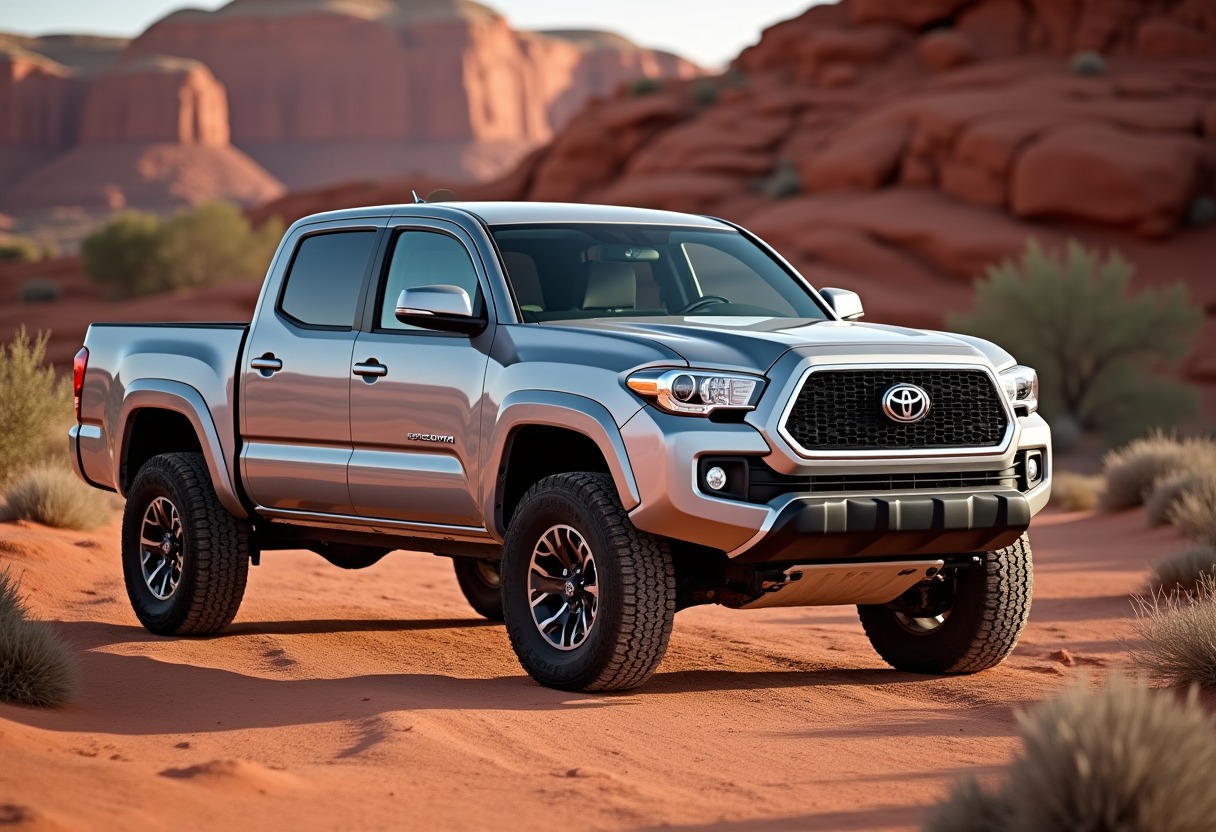
Most Tacoma owners wrestling with lift kit decisions face the same crossroads: 2-inch or 3-inch height gain. The difference affects everything from daily driving comfort to trail capability, yet manufacturers rarely break down the real-world trade-offs that matter when you're picking lines through rocky terrain.
Why Lift Height Changes Everything on Your Tacoma
The Toyota Tacoma's factory suspension geometry works well for moderate off-road use, but adding lift height fundamentally alters how your truck handles, rides, and performs. According to Toyota's engineering specifications, the third-generation Tacoma (2016+) uses an independent front suspension with coilovers and a solid rear axle with leaf springs — a setup that responds predictably to height modifications but with distinct performance changes at different lift levels.
A 2-inch lift maintains most of the factory suspension geometry while providing meaningful ground clearance gains. A 3-inch lift pushes beyond the "sweet spot" where you start trading daily drivability for maximum trail capability. The choice isn't just about height — it affects center of gravity, suspension travel, steering response, and what tire sizes you can actually run without trimming.
Most overlanders find their ideal compromise in understanding exactly what each lift height delivers on specific terrain types they frequent most.
2-Inch Lift Performance: The Balanced Choice
A 2-inch suspension lift on the Tacoma delivers 1.8-2.2 inches of actual ground clearance improvement at the differential and skid plates. This height keeps the truck's factory ride quality largely intact while opening up tire options to 285/70R17 (32.7-inch diameter) without modification.
The handling characteristics remain predictable. Body roll increases slightly in corners, but not enough to affect confidence on winding mountain roads. Steering response stays crisp, and the truck doesn't develop the "wandering" tendency common with higher lifts on highway drives.
For trail performance, 2-inch lifts clear most obstacles that stop factory-height trucks. Rock gardens that scrape the skids become manageable. Rutted trails with 8-10 inch center humps pass under the differential cleanly. Deep sand performance actually improves due to better approach and departure angles without the weight penalty of larger tires.
The real advantage shows in technical rock crawling. The moderate height gain reduces belly drag without raising the center of gravity enough to create instability on off-camber sections. Articulation remains close to factory levels, keeping wheels planted on uneven surfaces.
Daily driving comfort stays within acceptable limits for most drivers. Highway stability remains solid up to 75-80 mph. Parking garage clearances rarely become an issue. Gas mileage typically drops 1-2 mpg due to increased drag and slightly larger tires.
3-Inch Lift Performance: Maximum Capability with Compromises
A 3-inch lift provides 2.8-3.3 inches of ground clearance improvement and opens the door to 285/75R17 or 315/70R17 tires (33-34 inch diameter). This combination maximizes the Tacoma's off-road potential but introduces noticeable trade-offs in on-road behavior.
Ground clearance becomes genuinely impressive. Obstacles that require careful line selection with a 2-inch lift often pass underneath without drama. Rock ledges, fallen logs, and deep ruts that would high-center lower trucks become navigable. The increased tire size adds traction surface area and sidewall height for better impact absorption.
Handling changes become pronounced. The higher center of gravity creates noticeable body roll in corners. Highway crosswinds affect the truck more significantly. Steering requires more frequent corrections on long highway stretches. The truck develops a "taller" feel that takes adjustment for drivers accustomed to stock height.
Suspension travel often decreases with 3-inch lifts unless you upgrade to higher-end components. Many budget lift kits rely on spacers that reduce down-travel, hurting articulation on technical terrain. Quality coilover systems maintain or improve travel but cost significantly more.
| Lift Height | Ground Clearance Gain | Max Tire Size | Highway Stability | Trail Capability | Cost Range | |-------------|----------------------|---------------|------------------|------------------|------------| | 2-inch | 1.8-2.2 inches | 285/70R17 (32.7") | Excellent | Very Good | $800-$1,500 | | 3-inch | 2.8-3.3 inches | 315/70R17 (34.6") | Good | Excellent | $1,200-$2,800 |
The performance difference becomes stark in specific scenarios. Deep mud benefits from the larger tire footprint and increased clearance. Rocky terrain with sharp ledges favors the extra height. Sand dunes and loose surfaces benefit from the larger tire volume and flotation.
However, tight technical sections sometimes favor the 2-inch setup. Lower center of gravity helps on steep side slopes. Better articulation keeps tires in contact with the ground. The more predictable handling inspires confidence on exposed sections.
Recommended Toyota Tacoma Lift Kit Options
Quality lift kits separate themselves through component design and real-world durability. Budget spacer kits provide height but often sacrifice suspension travel and ride quality. Complete systems with matched components deliver better performance across all conditions.
For 2-inch lifts, → Shop toyota tacoma lift kit on Amazon systems from Bilstein, Old Man Emu, and Icon Vehicle Dynamics represent the quality tier. These include matched coilovers, leaf springs or blocks, and necessary hardware. Bilstein 5100 series provides excellent value with adjustable height settings. Old Man Emu offers the best ride quality for loaded touring. Icon delivers maximum performance for aggressive trail use.
For 3-inch applications, coilover systems become essential for maintaining suspension travel. → Shop tacoma coilover shocks on Amazon from Fox, King, or Icon provide remote reservoir options for serious trail use. These systems cost more but deliver performance that justifies the investment on challenging terrain.
Rear suspension typically uses → Shop tacoma leaf springs on Amazon or add-a-leaf configurations. Deaver Leaf Springs offers custom spring packs designed for specific load requirements. Alcan Springs provides similar custom options with excellent ride quality.
Budget-conscious builders often start with → Shop tacoma lift spacers on Amazon to test height preferences before committing to complete systems. Quality spacers from Rough Country or Supreme Suspensions provide temporary solutions but shouldn't be considered permanent for serious trail use.
Supporting modifications include → Shop tacoma sway bar links on Amazon to maintain proper suspension geometry. Extended brake lines, differential drop brackets, and steering stabilizers often become necessary with 3-inch lifts.
Installation Considerations Most Guides Skip
Alignment requirements change significantly with lift height. A 2-inch lift typically stays within factory adjustment range, but 3-inch systems often require aftermarket upper control arms to achieve proper alignment specs. Budget for professional alignment after installation — DIY alignment rarely achieves the precision needed for even tire wear.
Driveline angles become critical with higher lifts. The Tacoma's CV joints can handle moderate angles, but 3-inch lifts sometimes require differential drop brackets to maintain proper driveshaft geometry. Vibrations that develop after installation usually trace back to driveline angle issues rather than wheel balance problems.
Speedometer calibration changes with larger tires. The difference between factory 265/70R16 tires and 285/75R17s creates a 6% speedometer error. Most shops can reprogram the ECU, or aftermarket tuners like those referenced in our How To Pick The Right Lift Kit guide provide calibration options.
Brake performance requires attention with larger, heavier tire combinations. The factory brake system handles moderate increases well, but 35-inch tires on 3-inch lifts may benefit from upgraded brake pads or rotors for mountain driving with heavy loads.
Loading characteristics change with lift height. The higher center of gravity affects how the truck handles cargo weight. Roof loads become more noticeable in crosswinds. Trailer tongue weight limits may need reduction to maintain stability.
FAQ
Does a 2-inch lift require other modifications beyond the lift kit itself? Most 2-inch lifts work with factory components, but you'll likely need extended sway bar links and possibly longer brake lines depending on the specific kit design. Budget for a professional alignment, as the increased height often pushes alignment angles to the edge of factory specifications. Some manufacturers include extended links, while others require separate purchase — check what's included before ordering.
What's the real-world fuel economy difference between 2-inch and 3-inch lifts? A 2-inch lift typically reduces fuel economy by 1-2 mpg due to increased aerodynamic drag and slightly larger tires. A 3-inch lift with 33-34 inch tires usually drops economy by 3-4 mpg, primarily from the larger tire rolling resistance and increased wind resistance. The difference becomes more pronounced at highway speeds — city driving shows smaller impacts. These numbers assume quality lift components; cheap spacer lifts may perform worse due to altered suspension geometry.
Can I install 33-inch tires with a 2-inch lift without trimming? Technically possible but not recommended. A 285/75R17 (33.07") tire on a 2-inch lifted Tacoma will rub on the front bumper during full lock turns and may contact the rear wheel wells under compression. You'd need trimming, aftermarket bumpers, or wheel spacers to clear properly. Stick to 285/70R17 (32.7") as the largest practical size for 2-inch lifts without modifications.
How does lift height affect the truck's towing capacity? Toyota doesn't officially change towing ratings based on lift modifications, but real-world towing stability decreases with height. A 2-inch lift minimally affects the factory 6,400-pound rating, but trailer sway becomes more noticeable due to the higher center of gravity. A 3-inch lift makes the truck more susceptible to crosswind-induced trailer movement and may require tongue weight reduction or anti-sway systems for the same trailers you pulled confidently at stock height.
Which lift height works better for overlanding with heavy gear loads? For loaded overlanding, a quality 2-inch lift often outperforms a 3-inch setup. The lower center of gravity improves stability with roof loads, gear, and water. Fuel economy stays reasonable for long-distance travel. A 3-inch lift provides better clearance for technical sections but becomes less stable with heavy loads and creates more driver fatigue on long highway stretches. Choose based on your worst-case terrain — if you frequently encounter serious technical sections, the 3-inch lift's capability advantages may outweigh the stability trade-offs.
Every inch of lift height represents a deliberate trade-off between capability and compromise — choose the height that matches your most demanding terrain without exceeding your comfort zone for daily driving.
Some links on this page are affiliate links. We may earn a small commission if you purchase through them, at no extra cost to you.
As an Amazon Associate we earn from qualifying purchases. This article contains affiliate links; if you buy through them we may earn a small commission at no additional cost to you.