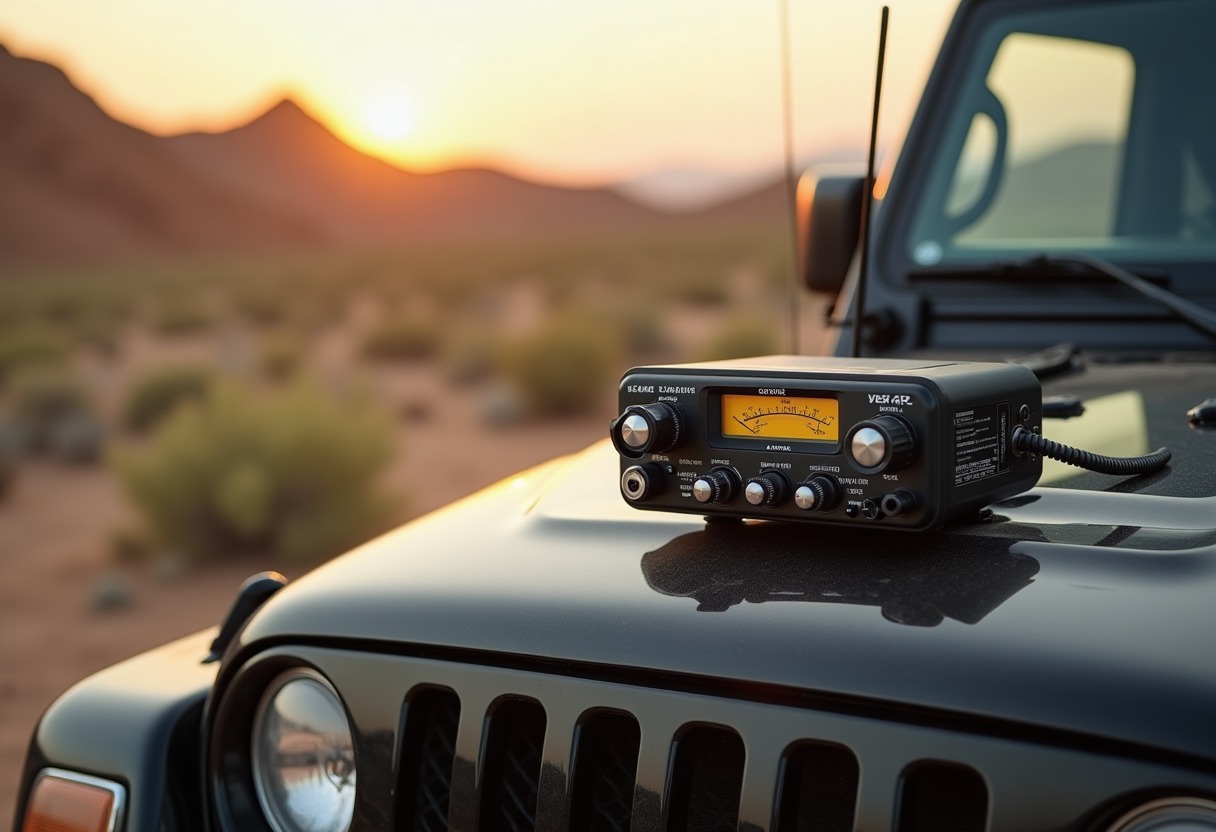
A dead radio left me separated from my group for four hours in the Mojave. The CB worked fine in my driveway, but once we hit the trail, static and 2-mile range told me everything I'd done wrong with antenna placement and ground plane setup.
CB radios still outperform GMRS and HAM in specific overlanding scenarios: instant communication without licenses, universal channel standards, and compatibility with every rig on the trail. Installing one properly in a Jeep Wrangler requires more than bolting a radio under the dash. Antenna location, coax routing, and SWR tuning determine whether you get 15-mile range or frustrated static.
Why CB Radio Still Works for Trail Communication
CB radio operates on 40 channels in the 27 MHz frequency range, requiring no license and offering line-of-sight communication up to 15 miles in ideal conditions. On technical trails, that drops to 3-8 miles depending on terrain, antenna height, and SWR calibration.
GMRS offers better clarity but requires a license and compatible radios across your group. HAM provides superior range but demands an FCC license and dedicated equipment. CB sits in the middle: adequate range, zero licensing friction, and guaranteed compatibility with trail clubs, rock crawling groups, and recovery teams. Channel 4 remains the universal off-road standard.
The Jeep Wrangler's metal body provides a solid ground plane for CB antennas, but the removable hardtop, soft top configurations, and fiberglass cowl areas create specific mounting challenges. JK, JL, and JT models share similar electrical systems but different dash layouts affecting radio placement.
Radio Unit Selection and Mounting Location
Mount your CB radio where you can reach the mic while driving but keep the unit protected from impact and water. Three proven locations work in Wranglers:
Under-dash mounting positions the radio above the footwell, reachable without taking hands off the wheel. Use the factory mounting screws above the glovebox area on JL models or fabricate a bracket for JK models. This keeps the radio dry even with the top off but limits screen visibility.
Center console mounting places the radio between the front seats, easily visible and accessible. Requires custom brackets or aftermarket console organizers with CB cutouts. Exposed to water in doorless configurations.
Overhead mounting installs the radio in the grab handle area or custom overhead console. Best visibility, but coax runs get longer and more complex.
→ Shop 40 channel CB radio on Amazon
Wire the radio directly to the battery with 14-gauge wire and inline fuse, not through the accessory panel. CB radios pull 1-2 amps on receive and up to 5 amps during transmission. Run the positive wire with existing wire bundles through the firewall, using grommets to prevent chafing. Ground the negative wire to a body bolt with bare metal contact, not a painted surface.
For a comprehensive look at other essential upgrades, check out our guide to the Best Jeep Wrangler Mods.
Antenna Mounting Locations and Ground Plane Considerations
Antenna placement determines your actual transmission range more than the radio itself. CB antennas need metal beneath them (ground plane) to radiate signals efficiently. The larger and flatter the ground plane, the better the signal propagation.
Hood mount (driver side hinge area) provides excellent ground plane from the metal hood and direct vertical positioning. Survives doorless and topless configurations. Antenna must be removed or folded before entering car washes. Best for JK models with all-metal hoods; JL power dome hoods work but require careful positioning away from the plastic dome.
Cowl mount (firewall area below windshield) keeps the antenna low and protected. Limited ground plane from the narrow cowl area reduces range by 20-30% compared to hood mounts. Works well for trail rigs that see heavy brush contact.
Roof rack mount gives maximum height for line-of-sight communication. Requires quality rack with metal construction — check our Best Jeep Roof Racks 2026 guide. Long coax runs increase signal loss; keep total cable length under 20 feet.
Bumper mount places antenna at the front or rear, integrated with aftermarket bumpers. Limited ground plane and low height cut range significantly. Consider only if other mounting options interfere with bumper-mounted accessories.
| Mount Location | Ground Plane | Typical Range | Installation Complexity | Durability | |----------------|--------------|---------------|------------------------|------------| | Hood (hinge area) | Excellent | 10-15 miles | Moderate (drilling required) | High (removable for obstacles) | | Cowl/Firewall | Fair | 6-10 miles | Low (bolt-on brackets) | Excellent (protected position) | | Roof Rack | Good | 12-18 miles | Moderate (rack required) | Moderate (exposed to branches) | | Front Bumper | Poor | 4-8 miles | Low (uses bumper holes) | Fair (impacts reduce lifespan) |
→ Shop CB antenna hood mount on Amazon
Fiberglass antennas flex under trail brush better than steel whips. A 4-foot fiberglass antenna balances range and trail clearance. The 3-foot versions work for heavily wooded trails but sacrifice 15-20% range. Magnetic mounts fail under trail conditions; always use bolt-through or bracket mounts with locking hardware.
Coax Cable Routing and Connection
Coax quality and routing directly affect signal strength. RG-58 cable is the standard for CB installations, rated for 50-ohm impedance matching the radio and antenna. Every foot of coax adds minimal signal loss, but poor connections and sharp bends create dead spots.
Run coax from the antenna mount to the radio using the most direct path possible. On hood mounts, route cable along the hinge through a rubber grommet, then follow existing wire channels along the firewall. Use cable ties every 12 inches to prevent vibration damage. Avoid routing coax near power cables, alternator, or spark plug wires; electromagnetic interference creates static.
→ Shop coax cable kit on Amazon
PL-259 connectors must be soldered, not crimped. Crimp connections corrode in wet conditions and create intermittent failures. Leave 6 inches of extra cable coiled near both ends for service access. Protect all exterior cable runs with split loom tubing; UV exposure degrades coax shielding within two years.
For topless Wrangler configurations, create a weatherproof disconnect point where the coax passes through the windshield frame. Quick-disconnect SO-239 bulkhead connectors let you remove the antenna and seal the entry point when running doorless.
SWR Tuning and Range Optimization
Standing Wave Ratio (SWR) measures how efficiently your antenna radiates the signal versus reflecting it back into the radio. High SWR burns out the radio's final transistor; proper tuning extends both radio life and transmission range.
Target SWR readings below 1.5:1 on channel 1 and channel 40. Readings between 1.5:1 and 2.0:1 work but reduce range. Above 2.0:1 indicates a problem with ground plane, antenna length, or coax connections.
Tuning process:
- Connect SWR meter between radio and antenna coax
- Key the mic on channel 1, note the reading
- Key the mic on channel 40, note the reading
- If channel 1 reads higher, antenna is too long — trim the tip 1/4 inch
- If channel 40 reads higher, antenna is too short — extend tuning tip or replace antenna
- Retest after each adjustment
Fiberglass antennas use adjustable tips for tuning. Steel whips require physical cutting. Make small adjustments; removing too much length requires antenna replacement.
Test actual range after tuning by having a partner drive to a known distance with another CB. Urban areas with buildings and power lines produce 4-6 mile range. Open desert and plains reach 12-15 miles. Mountain trails with switchbacks and canyons drop range to 2-4 miles regardless of equipment quality.
Recommended CB Radio Components for Wrangler Installation
Compact 40-Channel Radio: Uniden PRO520XL or Cobra 19 DX IV fit under-dash mounts in all Wrangler models. Both offer weather channels, RF gain control, and external speaker jacks. Skip radios with SSB (single sideband) unless you specifically need extended range for desert runs; the added complexity rarely justifies the cost on technical trails.
→ Shop fiberglass CB antenna on Amazon
4-Foot Fiberglass Antenna: FireStik II or Wilson 2000 provide the best balance of durability and range. The FireStik uses tunable tips for easy SWR adjustment. Wilson antennas include tuning instructions and pre-cut coax.
Hood Hinge Mount: Firestik K-4 or RoadPro adjustable mounts fit JK and JL hoods with minimal drilling. Both allow antenna removal without tools. Mount on the driver side to keep the antenna visible and reduce parking lot damage.
18-Foot Coax Cable Kit: Pre-terminated RG-58 cable with PL-259 connectors fits hood mounts to under-dash radios. Buy from the antenna manufacturer when possible to ensure impedance matching.
SWR Meter: Workman 104 or Astatic PDC2 provide accurate readings without requiring external power. Keep the meter in your recovery kit; SWR shifts after impacts or antenna damage.
Pair your CB installation with essential trail gear covered in our Off Road Recovery Gear Every Jeep Owner Needs guide.
Advanced Installation Considerations
Dual Antenna Systems: Running two antennas (hood and rear bumper) with a coax switch lets you optimize for terrain. Switch to the hood antenna for general trail use, then switch to rear-mounted antenna when backing up technical sections where a spotter uses CB for direction. Requires a quality coax switch with 50-ohm impedance and separate SWR tuning for each antenna.
Noise Suppression: Alternator whine and ignition noise bleed into CB transmissions on Wranglers with aftermarket electrical systems. Ferrite choke beads on the positive power wire (near the radio) eliminate most electrical noise. Install a noise suppressor inline with the positive cable if problems persist. Never run CB power through a dimmer circuit or PWM controller.
External Speaker Placement: The factory radio competes with CB audio in loud trail conditions. Mount an external CB speaker in the overhead grab handle area or A-pillar. Waterproof marine speakers handle doorless configurations without failure.
Hardtop vs Soft Top Considerations: Soft tops block CB signals minimally, but metal hardtops reduce range by 10-15% when the antenna is mounted below the roofline. Hood mounts avoid this issue entirely. If you swap between hardtop and soft top seasonally, recheck SWR after each swap; the change in ground plane affects tuning.
Integration with GMRS/HAM: Some overlanders run both CB and GMRS radios for group flexibility. Mount the CB for trail use and add a GMRS handheld for camp-to-vehicle communication. Separate antennas prevent interference.
FAQ
What's the real-world range of a properly installed Jeep Wrangler CB radio? Expect 8-12 miles in rolling terrain with clear line of sight, 3-5 miles in dense forest or canyons, and up to 15 miles in flat desert conditions. Antenna height and SWR tuning matter more than radio wattage for actual range.
Can I install a CB radio without drilling my Jeep? No permanent installations exist that perform well. Magnetic mounts fail under trail vibration, and clip-on brackets lack the ground plane needed for proper transmission. Hood mounts require two small holes; cowl mounts use existing bolt holes on some models.
Why does my CB work in town but not on the trail? Urban environments have repeater effects from buildings that extend apparent range. Trail use reveals actual antenna performance and SWR problems masked by city infrastructure. Check SWR and verify ground plane connections.
Do I need a CB radio if I already have a HAM license? CB provides compatibility with trail groups and recovery teams who don't hold HAM licenses. Channel 4 is universally monitored by off-road groups; HAM frequencies require coordination. Many serious overlanders run both systems.
How do I protect my CB antenna during car washes and garage parking? Use a quick-disconnect mount or choose a folding antenna design. Hood-mounted antennas should be removed before automated car washes. Mark your calendar to reinstall before trail trips; forgotten antennas are the most common installation failure.
Wrapping Up
Proper CB installation comes down to three factors: quality antenna placement with solid ground plane, clean coax routing with weather protection, and patient SWR tuning until both channels hit 1.5:1 or lower. Miss any of those and you're transmitting to nobody.
Some links on this page are affiliate links. We may earn a small commission if you purchase through them, at no extra cost to you.
As an Amazon Associate we earn from qualifying purchases. This article contains affiliate links; if you buy through them we may earn a small commission at no additional cost to you.