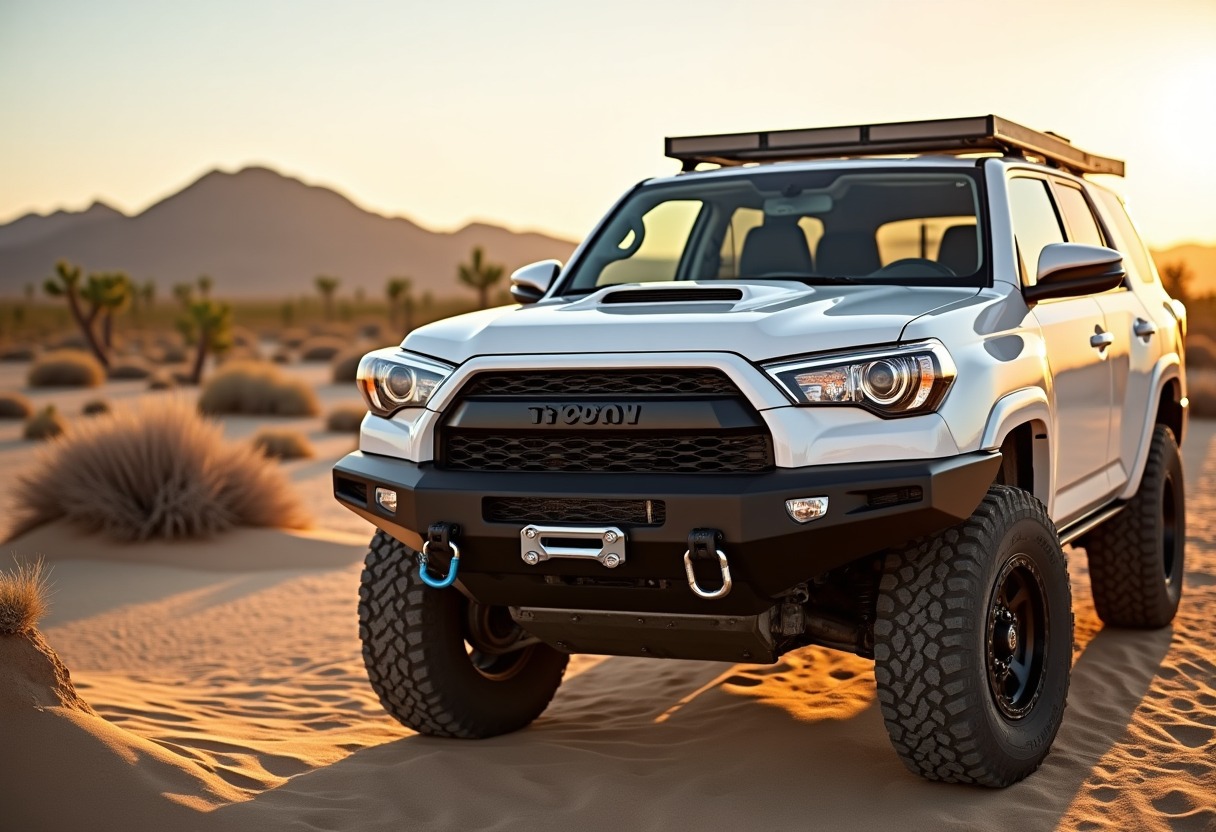
Your stock 4Runner plastic bumper will disintegrate on its first real rock encounter. The factory approach prioritizes crumple zones and pedestrian safety over trail durability — understandable for street use, but useless when you need genuine protection against boulders, stumps, and tight trail squeeze situations.
Why Material Choice Matters for 4Runner Front Bumpers
The Toyota 4Runner weighs 4,400-4,900 pounds depending on trim level, making front-end weight distribution critical for handling and approach angles. According to Motor Trend's testing data, adding 60-100 pounds of steel armor to the front can shift the center of gravity enough to affect suspension travel and steering response on technical terrain.
Steel bumpers typically add 80-120 pounds, aluminum options run 35-65 pounds, while hybrid designs split the difference at 50-85 pounds. The weight penalty directly impacts fuel economy, suspension wear, and cooling system performance — especially with the 4Runner's already-marginal 4.0L V6 power-to-weight ratio.
Your material choice also determines mounting options. Steel bumpers can support heavier winches (12,000+ pound capacity) without additional bracing, while aluminum designs often require reinforcement plates for anything above 9,500 pounds. This becomes crucial when you're comparing recovery capabilities on technical trails where a 4Runner vs Wrangler overlanding setup might need maximum pulling power.
Steel Bumper Analysis: Maximum Protection, Maximum Weight
Steel bumpers deliver unmatched impact resistance and recovery point strength. Quarter-inch steel plate construction can absorb multiple rock strikes without deformation, while 3/16" designs offer decent protection at reduced weight. The key advantage lies in repairability — steel bumpers can be welded and reshaped in the field using basic equipment.
→ Shop Toyota 4Runner steel armor bumper on Amazon
Mounting typically involves frame-tie connections using existing mounting points plus additional brackets. Quality steel bumpers integrate with crash sensors and airbag systems, though some budget options require sensor relocations that affect warranty coverage. Powder coating adds corrosion resistance, but expect touch-up work after serious rock contact.
Steel's thermal mass helps dissipate winch heat during extended recovery operations. The material naturally conducts heat away from winch motors, reducing overheating risks during multiple pulls. This thermal advantage becomes significant during group recovery situations where repeated winching is common.
Aluminum and Hybrid Designs: Balanced Performance
Aluminum bumpers use 6061-T6 or similar aircraft-grade alloys for strength-to-weight optimization. The material resists corrosion naturally but dents more easily than steel under impact. Welded aluminum construction requires specialized repair techniques — you can't field-fix aluminum with basic tools like steel.
→ Shop Toyota 4Runner aluminum bumper on Amazon
Hybrid designs combine steel impact zones with aluminum mounting structures. This approach places steel plates at likely contact points while using aluminum for brackets and non-impact areas. The result balances protection with weight savings, though at increased complexity and cost.
Manufacturing quality varies significantly in aluminum bumpers. Cast aluminum designs offer better impact resistance than fabricated options but add weight. Fabricated aluminum allows for lighter construction but requires thicker materials for equivalent strength, negating some weight advantages.
Material Comparison: Specifications and Performance
| Material | Weight Range | Impact Resistance | Repairability | Corrosion Resistance | Cost Range | |----------|--------------|-------------------|---------------|---------------------|------------| | Steel | 80-120 lbs | Excellent | Field weldable | Requires coating | $800-2,200 | | Aluminum | 35-65 lbs | Good | Specialist repair | Naturally resistant | $1,200-3,000 | | Hybrid | 50-85 lbs | Very good | Mixed complexity | Variable by design | $1,000-2,800 | | Factory Plastic | 15-25 lbs | Poor | Replacement only | UV degradation | $300-600 |
Specific Product Recommendations by Use Case
For serious rock crawling, Shrockworks and C4 Fabrication steel bumpers provide maximum protection with integrated recovery points rated for 20,000+ pounds. These bumpers include provisions for auxiliary lighting and maintain crash sensor functionality.
→ Shop 4Runner winch mount bumper on Amazon
Expedition-focused builds benefit from Dissent Off-Road aluminum designs that reduce nose weight while providing adequate trail protection. Their modular approach allows for lighting integration without permanent modifications.
Budget-conscious builders should consider Rough Country steel options that deliver basic protection and winch mounting at accessible price points. While lacking premium features, these bumpers handle moderate trail use effectively.
→ Shop 4Runner fog light brackets on Amazon
For mixed street-trail use, ARB Deluxe steel bumpers integrate fog lights, indicators, and recovery points in a refined package. The Australian engineering focuses on practical trail features without sacrificing daily-driver aesthetics.
Hybrid enthusiasts should examine WARN Trans4mer designs that combine steel impact plates with aluminum mounting structures. This approach delivers targeted protection while managing weight distribution.
Installation Considerations Most Guides Skip
Frame reinforcement becomes critical with heavy steel bumpers. The 4Runner's frame requires additional bracing plates behind factory mounting points to prevent stress concentration. This reinforcement adds installation complexity but prevents expensive frame damage during impacts.
→ Shop 4Runner recovery points on Amazon
Cooling system impacts vary by bumper design. Solid steel plates reduce airflow by 15-25% compared to stock, while perforated or mesh designs maintain better cooling. Monitor engine temperatures closely during break-in periods, especially with heavy-duty cooling packages.
Approach angle changes require suspension consideration. Adding 4-6 inches of bumper height affects departure angles on steep climbs. Some builders combine bumper upgrades with modest lift kits to maintain ground clearance ratios, though this approach requires careful planning similar to how to pick the right lift kit decisions.
Electrical integration demands attention to factory wiring harnesses. Quality bumpers include provisions for relocating fog lights and sensors, but budget options may require custom wiring work. Document factory connections before removal to simplify troubleshooting later.
Weight distribution affects handling characteristics permanently. Front-heavy configurations reduce rear traction and affect emergency braking performance. Consider this impact when planning comprehensive armor packages that might include skid plates and rock sliders.
FAQ
Which material offers the best protection-to-weight ratio for technical trail riding?
Hybrid steel-aluminum designs provide the optimal balance for technical trails. Steel impact zones handle rock strikes effectively while aluminum mounting structures keep overall weight manageable. This combination maintains approach angles while delivering genuine protection where it matters most. Pure steel offers maximum protection but can negatively affect suspension performance on technical climbs where weight distribution is critical.
How much does bumper material affect fuel economy on long overlanding trips?
Steel bumpers reduce fuel economy by 0.5-1.2 MPG on highway driving due to increased weight and altered aerodynamics. Aluminum options typically impact economy by 0.2-0.6 MPG, while hybrid designs fall between these ranges. The impact becomes more pronounced with additional gear loading and aggressive driving patterns. Consider this ongoing cost when calculating total ownership expenses over 5-10 years of regular trail use.
Can aluminum bumpers handle serious winch loads without frame damage?
Aluminum bumpers require careful winch selection and installation techniques to prevent frame stress. Limit winch capacity to 9,500 pounds or add steel reinforcement plates for heavier units. The material itself handles winch loads adequately, but mounting point stress concentration becomes the limiting factor. Proper load distribution through frame-tie designs and backing plates allows aluminum bumpers to handle most recovery situations safely.
Do steel bumpers require special maintenance compared to aluminum options?
Steel bumpers need regular inspection for coating damage and rust formation, especially after saltwater exposure or extended trail use. Touch-up painting becomes necessary every 2-3 years depending on use intensity. Aluminum bumpers require less maintenance but need inspection for stress cracks around welded joints. Both materials benefit from regular cleaning to remove trail debris that can trap moisture and accelerate corrosion or fatigue.
How does bumper choice affect insurance coverage and warranty considerations?
Aftermarket bumpers can affect insurance coverage if they alter crash performance or airbag deployment patterns. Steel bumpers may increase damage severity in collisions, potentially affecting premium calculations. Toyota warranty coverage typically remains intact for unrelated components, but crash-related damage might face scrutiny if aftermarket bumpers contributed to failure patterns. Document professional installation and maintain crash sensor functionality to minimize coverage complications.
Choose your Toyota 4Runner front bumper based on actual trail demands rather than theoretical protection scenarios — your suspension and handling will thank you for the restraint.
Some links on this page are affiliate links. We may earn a small commission if you purchase through them, at no extra cost to you.
As an Amazon Associate we earn from qualifying purchases. This article contains affiliate links; if you buy through them we may earn a small commission at no additional cost to you.