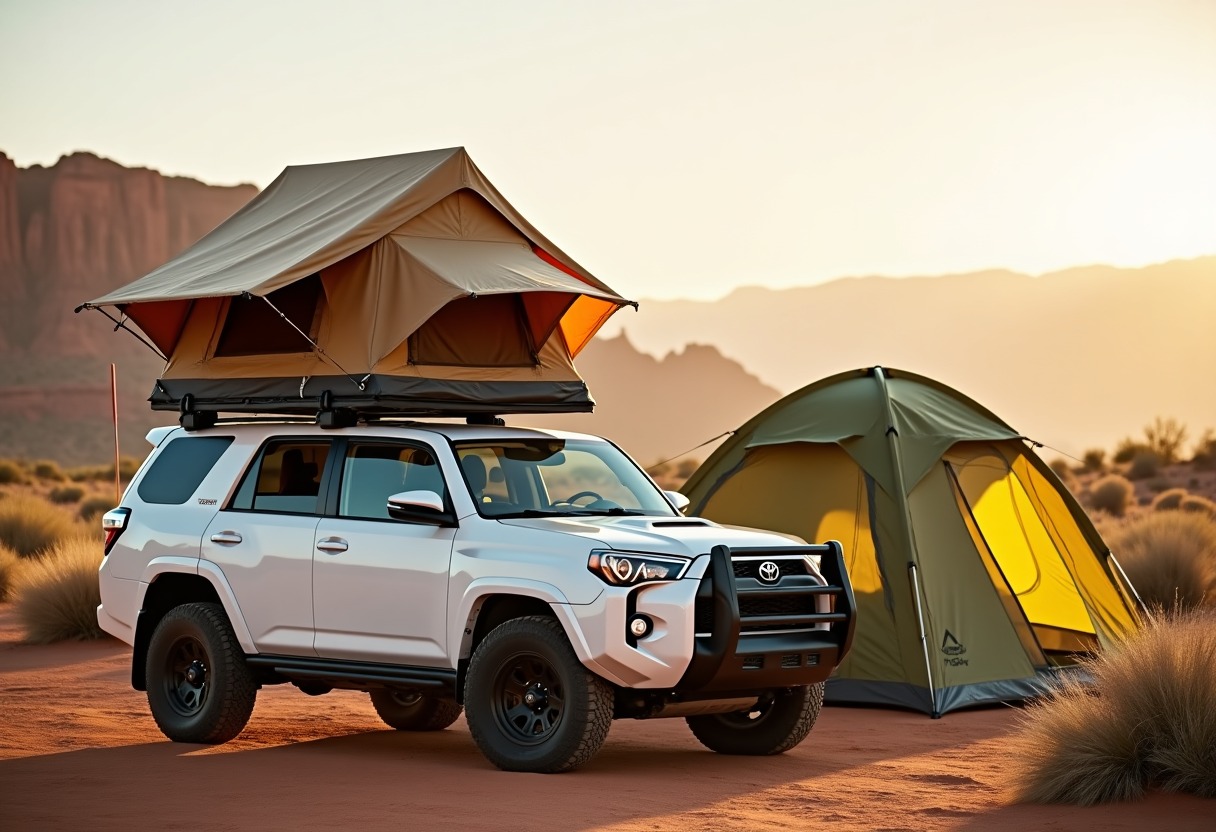
Your rig's roof can handle 150 pounds dynamic load, but that RTT weighs 160 before you add bedding and two bodies. The math matters when you're 40 miles into the backcountry, and the wrong tent choice costs you more than comfort—it hits your fuel range, handling, and whether you can safely run that technical section without scraping or rolling.
Why the Roof Top Tent vs Ground Tent Decision Changes Everything
Every pound you mount above the cab raises your center of gravity and compounds body roll on off-camber trails. A 160-pound roof top tent sits 60+ inches above ground level on most Wranglers and 4Runners, effectively tripling its weight's impact on stability compared to gear stored low in the bed or cargo area.
Dynamic roof load ratings—what your factory roof can handle while moving—typically run 120-165 pounds depending on whether you're running a Bronco, Tacoma, or 4Runner vs Wrangler for overlanding. Static ratings (parked) allow 3-4 times that, but you need to get to camp first. A softshell RTT averages 110-130 pounds; hardshells push 150-180. Add two adults and bedding, and your static load hits 500+ pounds—well within limits. But that drive to camp with all that weight up high? That's where handling suffers and fuel economy drops 2-4 MPG depending on aerodynamics and terrain.
Ground tents, by contrast, add zero height penalty, no rack requirement, and typically weigh 8-15 pounds for quality 2-3 person models. The trade? Setup time, ground conditions, and weather exposure. According to Wikipedia's article on roof-top tents, modern RTTs gained popularity among overlanders specifically because they eliminate the need to clear ground and offer protection from ground-dwelling creatures and flooding.
Weight, Roof Racks, and What Your Rig Actually Handles
Your factory roof crossbars—if your rig came with them—usually max out around 150-165 pounds dynamic. Most RTT manufacturers recommend upgrading to aftermarket racks rated 250-300 pounds dynamic. That rack alone adds 40-70 pounds before the tent goes on. If you're already running a Best Jeep Roof Racks 2026 setup for lights and recovery boards, factor those pounds into your total.
Here's the real calculation: dynamic weight (tent only) + static weight (tent + occupants + gear) + rack weight. A Smittybilt Overlander XL weighs 115 pounds, needs a 50-pound rack, and holds two adults plus 30 pounds of bedding—total static load around 450 pounds. Your Wrangler JL's roof handles that parked, but drive a washboard road with that load bouncing above the cab and your shocks, steering response, and roll resistance all change noticeably.
Ground tents sidestep this entirely. A Big Agnes Copper Spur HV UL3 weighs 3 pounds 10 ounces. A Nemo Wagontop 4P hits 11 pounds 12 ounces with more headroom than most RTTs. Neither requires rack upgrades, and both pack inside the cab where weight distribution actually helps stability rather than hurting it.
The fuel penalty: RTTs add 10-15% drag depending on profile. Softshells create less wind resistance than hardshells when closed. Expect 2-3 MPG loss highway, 3-5 MPG loss on trails where you're pushing 3,500+ RPM in low range. Ground tents? Zero fuel penalty. Over a 2,000-mile overland trip, that's 30-50 extra gallons—$120-200 at current prices.
Setup Time, Weather, and Real Trail Conditions
RTT marketing claims "two-minute setup" hold true only under ideal conditions—dry, level ground, no wind, practiced user. Reality: 3-5 minutes for softshells, 1-2 minutes for hardshells once you're parked. But here's what they don't tell you: you lose camp access every time you drive. Need to make a supply run? Collapse the tent. Want to scout a trail branch or move to better cell reception? Break camp. Ground tents stay put while your rig goes mobile.
Setup on uneven terrain exposes another RTT weakness. Your vehicle needs to be level enough that sleeping isn't a slide-to-one-side ordeal. That means leveling boards, rock stacking, or spending 10 minutes finding the one flat spot—time you wouldn't spend with a ground tent that adapts to slight grades with a simple pad adjustment. I've spent 20 minutes leveling a Tacoma on a sloped site in Utah when a ground tent would've pitched in five.
Weather protection cuts both ways. RTTs keep you off wet ground and away from puddling rain, but they're exponentially harder to pack wet. Stuff a soggy ground tent in a dry bag and deal with it at home. An RTT? You're either packing it soaking wet—adding 15-20 pounds of water weight and inviting mold—or spending 30+ minutes drying it before breakdown. Ground tents also vent better in humidity; RTTs trap condensation against the fabric ceiling where it drips back on you by morning.
Cold weather amplifies the ground tent advantage. RTTs lose heat through the floor (thin insulation) and soak up wind chill with no ground buffer. A quality ground tent for overlanding on a foam pad and sleeping bag beats an RTT without a heater when temps drop below 35°F. Add snow, and RTTs become dangerous—that static load rating doesn't account for wet, heavy snow accumulation on the shell.
Roof Top Tent vs Ground Tent: Direct Comparison
| Factor | Roof Top Tent | Ground Tent | |--------|---------------|-------------| | Setup Time | 2-5 minutes (hardshell faster); must re-setup if you move rig | 5-15 minutes; stays erected while rig is mobile | | Weight Impact | 110-180 lbs tent + 40-70 lbs rack; raises center of gravity; 2-5 MPG fuel penalty | 8-15 lbs; stored low; zero fuel penalty | | Ground Conditions | Requires level vehicle placement; rocky/uneven terrain complicates parking | Sets up on any cleared flat spot; adapts to slight grades easily | | Weather Packup | Must dry before packing or risk mold; wet packup adds 15+ lbs | Pack wet in dry bag; deal with drying at home | | Cost | $1,200-3,500 + rack ($200-600) = $1,400-4,100 total | $150-600 for quality 2-4 person tents |
The choice isn't universal. Long-term basecamping where you stay put for days? RTT wins—you're not moving the rig, setup happens once, and elevated sleeping beats rocky ground. Multi-site trips where you move every 1-2 nights? Ground tent offers mobility and faster pack-out. Solo travelers in a Gladiator or Tacoma with bed access might split the difference with a truck bed tent, but that's a separate category entirely.
If you're building out a Tacoma vs Gladiator for overlanding or adding camping to a Best Jeep Wrangler Mods list, the tent decision should come after you define your trip style, not before.
Gear That Solves RTT and Ground Tent Weak Points
Some overlanders run both: ground tent for mobility-heavy trips, RTT for destination camping. If you're committed to one system, these accessories close the gaps.
For RTT Users:
→ Shop roof rack crossbars on Amazon — Upgrade from factory bars to 300+ pound dynamic-rated aftermarket racks. Prinsu, Rhino-Rack, and Sherpa lead the field for Wranglers, Broncos, and Tacomas. Budget $400-700 installed.
→ Shop tent annex rooms on Amazon — Annex rooms extend livable space below the RTT, creating a changing room and gear storage that doesn't require climbing the ladder. Also adds privacy and bug-free space for $200-400.
Leveling boards — ARB or MaxTrax doubles work for both recovery and RTT leveling. Get your rig flat in 30 seconds instead of hunting for rocks.
For Ground Tent Users:
→ Shop camping cots on Amazon — A collapsible cot lifts you off cold, uneven ground and packs down to 24 inches. Helinox and REI offerings run 4-8 pounds and solve the "rocks-under-your-back" problem RTTs eliminate. Cost: $150-300.
Footprint tarps — Custom-fit groundsheets protect tent floors from punctures and extend tent life. Add a tarp above for rain fly redundancy, and you've weatherproofed better than most softshell RTTs.
High-volume pump — An electric 12V pump inflates sleeping pads in 60 seconds. Keep one in the rig if you're running inflatable pads; they pack smaller than foam and insulate better than RTT mattresses.
Universal Additions:
Portable lighting — Regardless of tent type, a rechargeable LED strip or lantern makes setup and nighttime livability better. Goal Zero and Streamlight options integrate with existing power systems if you're running dual batteries or a Best Jeep Wrangler Accessories 2026 electrical setup.
What Most Comparisons Miss: Long-Term Ownership Costs and Rig Adaptability
RTTs lock you into a roof-mounted ecosystem. That means other rooftop gear—recovery boards, fuel cans, spare tires—competes for the same real estate or gets relocated. On a two-door Wrangler with limited interior space, that's a tough trade. A Gladiator or Tacoma bed offers more flexibility, but you're still dealing with height penalties at drive-throughs, parking garages, and low-clearance trails.
Resale value tilts toward RTTs—they hold 50-60% of purchase price after three years if maintained well, versus 20-30% for ground tents that show wear faster. But that assumes you're selling. If you switch rigs, does your RTT mount transfer? Hardshells require specific rack configurations; switching from a Wrangler to a Bronco might mean new mounting hardware or a complete rack swap. Ground tents move between vehicles with zero adaptation.
Maintenance is another hidden cost. RTTs need annual weatherproofing, hinge lubrication, and fabric inspection for UV damage. Budget 2-3 hours per year plus $50-80 in products. Ground tents need seam sealing every few years and pole inspection, but that's 30 minutes and $20. Both need proper storage—RTTs can stay mounted if you drive regularly and have garage clearance, but ground tents pack into a closet.
Insurance and theft: RTTs are high-value targets. If you're parking in trailhead lots overnight, they're visible and removable with basic tools. Some overlanders cable-lock them to racks, but that's another $40-60. Ground tents stored inside the cab don't present a theft risk. Comprehensive insurance usually covers RTTs, but verify your policy—some exclude "accessories" over $1,000 unless specifically listed.
The ugliest truth? Most RTT buyers use them 3-5 times before reverting to ground tents or hotels. The convenience promise doesn't match reality for weekend warriors who move camps daily and don't want to lose rig mobility. If you're genuinely doing multi-week trips with 3-5 night stays per location, RTTs pay off. If you're doing overnighters with daily repositioning, you'll curse the setup-breakdown cycle by trip three.
FAQ
Do roof top tents affect off-road handling and trail capability?
Yes. Adding 110-180 pounds 5+ feet above ground raises your center of gravity enough to increase body roll on off-camber sections and reduce your effective approach angle if the tent overhangs the windshield. A Wrangler JL with a 150-pound RTT loses roughly 8-10% lateral stability in articulation compared to the same rig without it. Adjust your trail line choices and take off-camber obstacles slower.
Can I mount a roof top tent on a soft top Jeep Wrangler?
No. Soft tops don't provide structural support for roof loads. You need either a hardtop with factory rails or a full aftermarket roll cage with crossbars that bolt to the frame—think Gobi or Garvin racks designed for soft-top Wranglers. Those racks run $800-1,400 and must be frame-mounted, not top-mounted. A Best Jeep Roof Racks 2026 guide covers frame-mount options in detail.
How much does a roof top tent reduce fuel economy on highway vs trails?
Expect 2-3 MPG loss at 65-75 MPH highway speeds due to aerodynamic drag. On trails, where you're in low range at high RPM and climbing grades, the loss jumps to 3-5 MPG because the engine works harder to move the extra weight uphill. A 500-mile trip that normally takes 28 gallons might take 32-34 gallons with an RTT mounted—plan fuel stops accordingly.
What's the best way to prevent condensation in a roof top tent?
Crack all windows and vents even in cold weather—airflow is your only real defense against condensation. A small 12V fan improves circulation inside hardshells. Avoid cooking inside the tent, which dumps moisture into the air. Store wet clothes outside or in a separate bag. Even with ventilation, expect some condensation on cold mornings; keep a microfiber towel handy to wipe fabric before it soaks through.
Do ground tents work in desert camping with rocky or hard-packed ground?
Yes, but you'll need a strategy. Free-standing tents (don't require stakes for structure) like Big Agnes Copper Spur or Nemo Dagger work on rock slabs—just weight the corners with rocks. Hard-packed desert caliche is tougher; bring rock stakes (not standard aluminum pegs) and a rubber mallet. Alternatively, use a cot inside a larger tent, which eliminates ground contact entirely and solves both the rock and critter problems ground tents face.
The Verdict Depends on Your Actual Use Case, Not Marketing Hype
Roof top tents make sense for long-haul overlanders who basecamp for days, prioritize off-ground sleeping, and don't mind sacrificing rig mobility and fuel economy. Ground tents win for fast-moving trips, budget builds, solo travelers, and anyone who values packing up wet or moving camp without breaking down sleep systems. Neither is universally better—the right call depends on whether you value convenience at camp or flexibility on the trail.
Some links on this page are affiliate links. We may earn a small commission if you purchase through them, at no extra cost to you.
As an Amazon Associate we earn from qualifying purchases. This article contains affiliate links; if you buy through them we may earn a small commission at no additional cost to you.