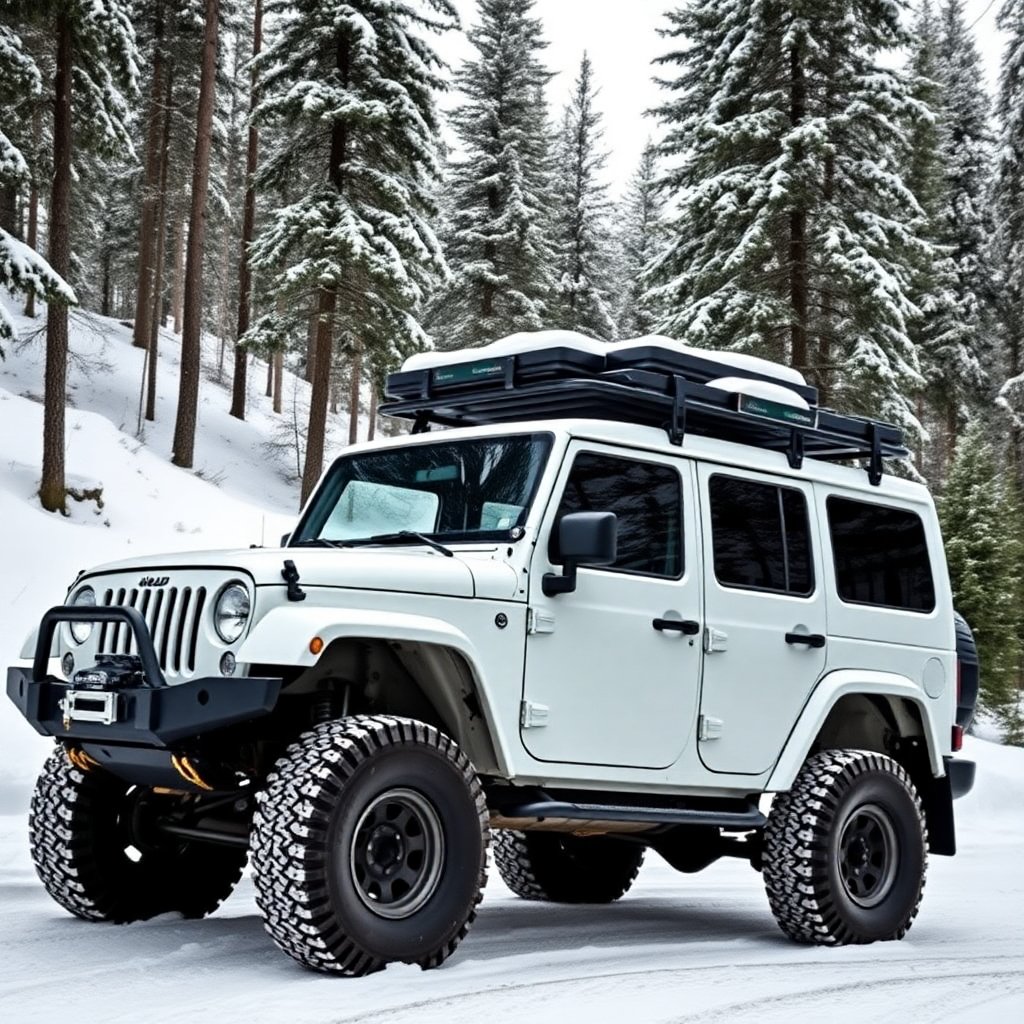
The first real snowfall changes everything about a trail you thought you knew. Ruts fill in and hide rocks, shelf roads lose their edges, and an easy forest road can become a stuck-for-hours lesson in humility. Snow wheeling is also some of the most rewarding driving a 4x4 can do: quiet trails, empty campsites, and the satisfaction of a rig that is built and driven well.
The difference between a great snow day and a long, cold recovery almost always comes down to preparation. This guide covers how to set up your vehicle, when to run tire chains, how to air down for snow, the recovery techniques that work in winter, and the survival gear that belongs in every rig from November through spring.
Affiliate disclosure: As an Amazon Associate we earn from qualifying purchases. Some links below are affiliate links, which never change what we recommend or what you pay.
Why Snow Is Different From Mud or Sand
Snow behaves unlike any other trail surface because its character changes with temperature, depth, and time of day.
- Fresh powder is light and forgiving at shallow depths but builds up in front of the tires and bumper as it gets deeper, eventually high-centering the vehicle on packed snow beneath the frame.
- Wet, heavy snow packs into tire treads and turns them into slicks if the tire does not self-clean.
- Crust forms when snow melts and refreezes. It may hold a vehicle's weight for a moment and then collapse, dropping the tires into a hole.
- Ice and packed snow on roads and shelf trails offer very little grip, and no amount of horsepower helps.
The big lesson is that momentum, flotation, and patience matter more than raw traction. A light, well-aired rig driven smoothly will often outperform a heavier, more aggressive build driven with too much throttle.
Prep Your Rig Before the First Storm
Tires Matter Most
Your tires decide how your rig handles snow more than any other modification. All-terrain tires carrying the three-peak mountain snowflake symbol meet an industry standard for severe snow traction, and they often outperform aggressive mud-terrains on packed snow and ice. Mud-terrains can be excellent in deep snow thanks to open voids that clean out, but their hard compounds and limited siping can struggle on ice.
If you are still choosing tires, our off-road tire guide for the Jeep Wrangler covers the trade-offs between tread patterns and compounds.
Check the Basics
- Battery health. Cold weather reduces battery output. Test your battery before winter, and consider a lithium jump starter as a backup.
- Coolant and washer fluid rated for your lowest expected temperatures.
- Wiper blades in good condition, ideally winter blades for heavy snow.
- Locking hubs and lockers tested and working before you need them.
- Recovery points front and rear, properly rated and easy to reach under a snow-covered bumper.
Tire Chains: When They Make Sense
Chains are the most effective traction device you can carry for ice and packed snow. They bite into hard surfaces where tread alone cannot, and they can be the difference between climbing an icy grade and sliding backward.
Types of Traction Devices
- Ladder-style link chains are the classic design. They offer strong grip and are relatively affordable, though they give a rough ride and need careful fitment.
- Diamond or square-link chains provide more continuous contact with the ground, improving lateral grip and smoothing the ride. Heavier-duty versions are popular with off-roaders.
- Cable chains are lighter and lower-profile, and may fit vehicles with tight wheel-well clearance, but they generally offer less grip and durability.
- Textile snow socks are easy to install and work in light snow, but they wear quickly on bare pavement and rocks.
→ Shop off-road tire chains for trucks and SUVs on Amazon
Chain Fitment and Use
- Match the chain to your exact tire size. Oversized off-road tires often need chains sold specifically for those dimensions.
- Check clearance. Lifted rigs usually have room, but confirm that chains will not contact brake lines, sensors, or suspension components at full lock and articulation. Your owner's manual may have guidance.
- Chain all four tires if you can. Many drivers only chain one axle, but four chained tires offer the best control on steep, icy terrain.
- Practice installing them at home. Learning in a dry driveway is far easier than in a blizzard with numb fingers.
- Keep speeds low, often under the manufacturer's stated limit, and remove chains when you reach clear pavement to avoid damage.
Some states and mountain passes have chain requirements during storms, so check local regulations for your routes.
Airing Down in Snow
Airing down increases the tire's footprint and helps it float on top of snow rather than digging in. In deep snow, many experienced snow wheelers run significantly lower pressures than they would on dirt, sometimes in the single digits with beadlock wheels. Without beadlocks, very low pressures risk unseating a bead, especially in the cold, so most drivers stay more conservative.
There is no single correct number. It depends on tire size, vehicle weight, wheel type, and snow conditions. Start moderate, test the result, and adjust. Our guide to tire deflators and airing down walks through the tools and process.
A few winter-specific notes:
- Cold lowers tire pressure. Pressures drop as temperature falls, so check them once the tires have cooled to ambient temperature.
- Air back up before the highway. Low pressures on pavement reduce handling and can overheat tires.
- Carry a reliable air compressor. Airing back up in freezing weather takes longer, and a weak compressor can leave you on a cold roadside for a long time.
→ Shop portable off-road air compressors on Amazon
Snow Driving Technique
- Use momentum, but stay smooth. Steady throttle keeps you moving. Spinning tires dig holes and polish snow into ice.
- Avoid sudden inputs. Gentle steering, braking, and acceleration help keep tires from breaking loose.
- Stay in existing tracks where it is safe and legal, since packed tracks offer better footing.
- Know when to stop. If forward progress stops, back up into your own tracks and try again with a slightly different line, rather than spinning in place.
- Watch for drop-offs. Snow can hide the edge of a shelf road or a culvert. If you cannot see the trail edge, slow down or turn back.
- Never wheel alone in winter. A buddy vehicle is the most important piece of recovery gear you can bring.
Winter Recovery: Techniques and Gear
Getting stuck in snow is common, and most snow recoveries are straightforward if you are prepared.
Dig First
Most snow stucks come from high-centering on packed snow under the frame. Before pulling, dig. Clear snow from in front of all four tires and from under the frame and differentials so the vehicle can move. A compact, sturdy shovel is non-negotiable in winter.
→ Shop compact snow shovels for off-road vehicles on Amazon
Traction Boards
Traction boards placed in front of the tires give them something to grab and can often free a vehicle without a pull. In snow, wedge them firmly under the tread and use gentle throttle. Our traction board comparison covers which designs grip best and whether budget boards hold up.
Kinetic Recovery
A kinetic rope or snatch strap can pull a stuck vehicle free with stored energy, but it requires care. Use rated recovery points, never tow balls, and keep bystanders well clear. Ropes and straps can absorb water and freeze, so dry them after use. Soft shackles are popular in winter since they are lighter and easier to handle with gloves.
Winching in Snow
Winching in snow often means finding an anchor point. Trees protected with a tree saver strap work well. Where there are no trees, a buried anchor, such as a spare tire or purpose-built anchor buried in the snow, can work but takes time. Keep the line under tension slowly, wear gloves, and use a winch damper.
Winter Survival Gear Every Rig Should Carry
Recovery can take hours, and a minor delay can become serious in subzero temperatures. The National Weather Service has a useful winter safety and vehicle preparedness guide that is worth reviewing before the season. For trail rigs, carry:
- Warm layers, insulated boots, gloves, and a hat for every passenger, even if you plan to stay in the vehicle.
- Sleeping bags or blankets rated for the conditions.
- Extra food and water, stored so it will not freeze solid.
- A first-aid kit and headlamps with spare batteries.
- Communication. Cell coverage disappears in the backcountry. Carry a GMRS radio, a satellite messenger, or a satellite connection.
- A heat source, such as a properly installed diesel heater, with a carbon monoxide detector if sleeping in the vehicle. Never run the engine with a snow-blocked exhaust.
Leave No Trace in Winter
Winter wheeling can be low-impact on frozen ground, but respect trail closures and seasonal restrictions. Many forest roads close in winter to protect wildlife and road surfaces. Stay on designated routes, avoid wet, thawing trails that rut easily, and pack out everything.
The Bottom Line
Snow wheeling rewards drivers who prepare. Run snow-rated tires, carry chains and practice installing them, air down for flotation and air back up before the highway, and pack a shovel, traction boards, and recovery gear you know how to use. Most importantly, never head out alone, tell someone your plans, and carry enough survival gear to wait out a long night. Do that, and winter becomes one of the best seasons on the trail.
As an Amazon Associate we earn from qualifying purchases. This article contains affiliate links; if you buy through them we may earn a small commission at no additional cost to you.