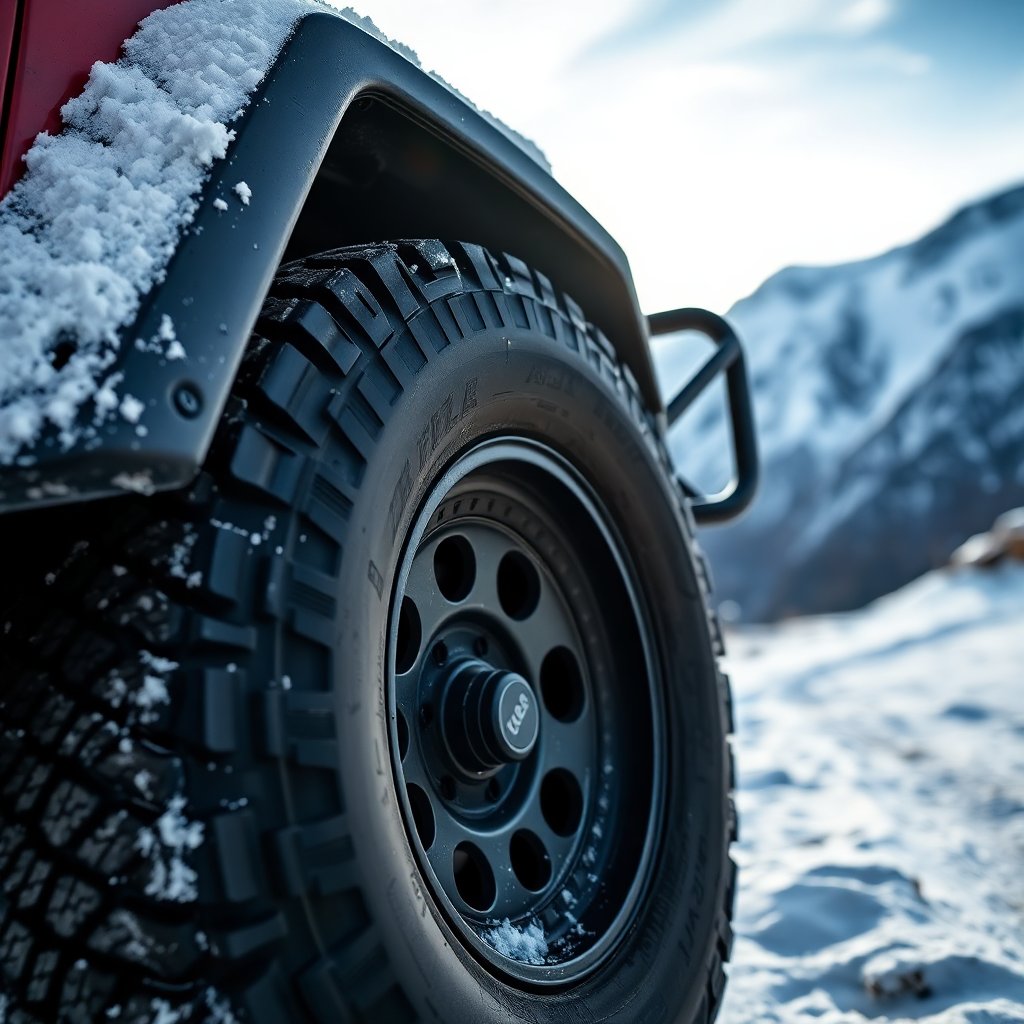
Airing down is the cheapest, most effective traction upgrade you can make to a trail rig, and most people do it with a house key jammed into a valve stem while squinting at a gauge. That works, sort of, but it is slow, imprecise, and miserable when it is 28 degrees and snowing sideways. A proper tire deflator turns a ten-minute crouch at each corner into a set-it-and-walk-away job. As winter overlanding season arrives and the SEMA Show floor (November 3 to 6 in Las Vegas) fills up with recovery gear, it is worth understanding what actually separates a good deflator from a gimmick.
This guide covers the two main deflator styles, how far to drop your pressure for sand, snow, mud, and rock, and which kits are worth buying. It pairs naturally with airing back up, so if you have not sorted that side yet, start with our overland air compressor guide.
Affiliate disclosure: some links below are Amazon affiliate links. If you buy through them, this site may earn a small commission at no extra cost to you.
Why airing down works
Lowering tire pressure lengthens the tire's contact patch, spreading the vehicle's weight over more rubber. On soft surfaces that means the tire floats rather than digs; on rock it means the tread wraps around edges instead of skating off them. The ride softens noticeably too, because the sidewall is doing more of the suspension's job.
The trade-offs are real. Run too low and you risk peeling a tire off the bead, especially in hard cornering or at speed. Low pressure also raises heat buildup, so airing down is a low-speed, off-pavement move that you reverse the moment you hit the highway. That reversal is why a deflator and a compressor are a matched pair, not two separate purchases.
The two kinds of deflators
Almost everything on the market falls into one of two buckets, and they suit different owners.
Rapid deflators thread onto the valve stem and let you unscrew and remove the valve core, dumping air far faster than a stock valve allows. A built-in gauge lets you monitor pressure and stop where you want. The ARB E-Z Deflator is the archetype, and Boulder Tools makes a well-reviewed version. These are single-tool units, so you do one tire at a time, but they are fast and precise, and the gauge doubles as your everyday pressure checker. Off-Road.com's tire deflator buyer's guide walks through this style in detail.
Automatic deflators come as a set of four screw-on caps, each pre-set to a target pressure. You thread all four on at once and walk away; each one stops itself when the tire reaches the set point. Staun is the long-standing name here, and they air down all four corners hands-free while you get the recovery boards ready. The catch is calibration: you set the target pressure yourself against a reference gauge, and cheaper units drift, so you verify a corner before trusting all four.
Which to pick. If you air down occasionally and want one do-everything tool, get a rapid deflator. If you air down constantly and value walking away from the job, get an automatic set. Plenty of experienced overlanders keep both: the automatic set for speed, the rapid tool for its accurate gauge.
→ Shop rapid tire deflators on Amazon
Target pressures by terrain
There is no single correct number, because it depends on tire size, load, and rim width. The figures below are common starting points for a mid-size or full-size 4x4 on all-terrain or mud-terrain tires. Verify your own bead reseats and adjust from there.
Hard-packed dirt and gravel: 22 to 26 PSI. A modest drop for ride comfort and grip without much risk.
Rock crawling: 12 to 18 PSI. Low enough to let the tread conform to rock, but watch your beads on sharp side loads.
Sand: 12 to 15 PSI, sometimes lower for deep dune driving. Sand rewards a big contact patch more than almost any surface.
Snow and mud: 15 to 20 PSI. Winter driving is where a deflator earns its keep, because a lower patch bites through loose snow to the surface below. Do not go so low that you can spin the tire off the bead in deep, sticky mud.
If you run beadlock wheels you can go dramatically lower, but for standard rims, treat the low teens as a floor. When in doubt, air down less than you think, test traction, and drop further only if you need to.
Features that actually matter
Accuracy of the built-in gauge. A deflator you cannot trust is a deflator you second-guess with a separate gauge. Look for units with a replaceable, glare-free dial and a reputation for reading close to a digital reference.
Speed. Valve-core-removal designs move a huge amount of air fast. If you air down four tires at every trailhead, the minutes add up.
Cold-weather usability. Metal bodies and knurled grips are far easier to operate with gloves on than tiny plastic thumbwheels. This is a winter buying consideration people forget in July.
Case and hose fit. Automatic sets live in a pocket for years; a hard case keeps them calibrated and findable. Rapid deflators should include the right stem adapters for your valves.
→ Shop automatic tire deflator sets on Amazon
Where deflators fit in your recovery kit
A deflator is one node in a small system. You air down to get traction, and when the trail still bites you air-down alone will not save you, so you reach for boards or a strap. If you have not built that side out, our roundup of off-road recovery gear every rig owner needs covers the essentials in order of priority, and traction boards deserve their own read in our Maxtrax vs budget alternatives test.
The natural companion purchase is the compressor to air back up. Airing down takes seconds; airing four tires from 15 PSI back to 35 for the highway can take real time with an undersized pump, which is exactly why matching your deflator to a capable compressor matters. A good pairing means you can drop pressure at the trailhead and be road-ready in minutes when you are done.
→ Shop portable air compressor and deflator combos on Amazon
What to buy
For most people who air down a couple of times a month, a quality rapid deflator with a trustworthy gauge is the single best first purchase. It is fast, it teaches you your rig's numbers, and it doubles as your everyday pressure tool.
Add an automatic four-piece set later if you air down frequently or hate crouching at each corner in bad weather. Set them against your rapid deflator's gauge, verify one tire, and enjoy walking away.
Skip the throwaway plastic single deflators sold in gas-station bins. They read inaccurately, crack in the cold, and cost you the one thing airing down is supposed to save: time and confidence at the trailhead.
Whatever you choose, remember the pairing rule. A deflator without a compressor leaves you stranded on soft tires, so buy the two together and treat them as one tool. Do that, and airing down stops being a chore and becomes the first thing you reach for when the pavement ends.
As an Amazon Associate we earn from qualifying purchases. This article contains affiliate links; if you buy through them we may earn a small commission at no additional cost to you.