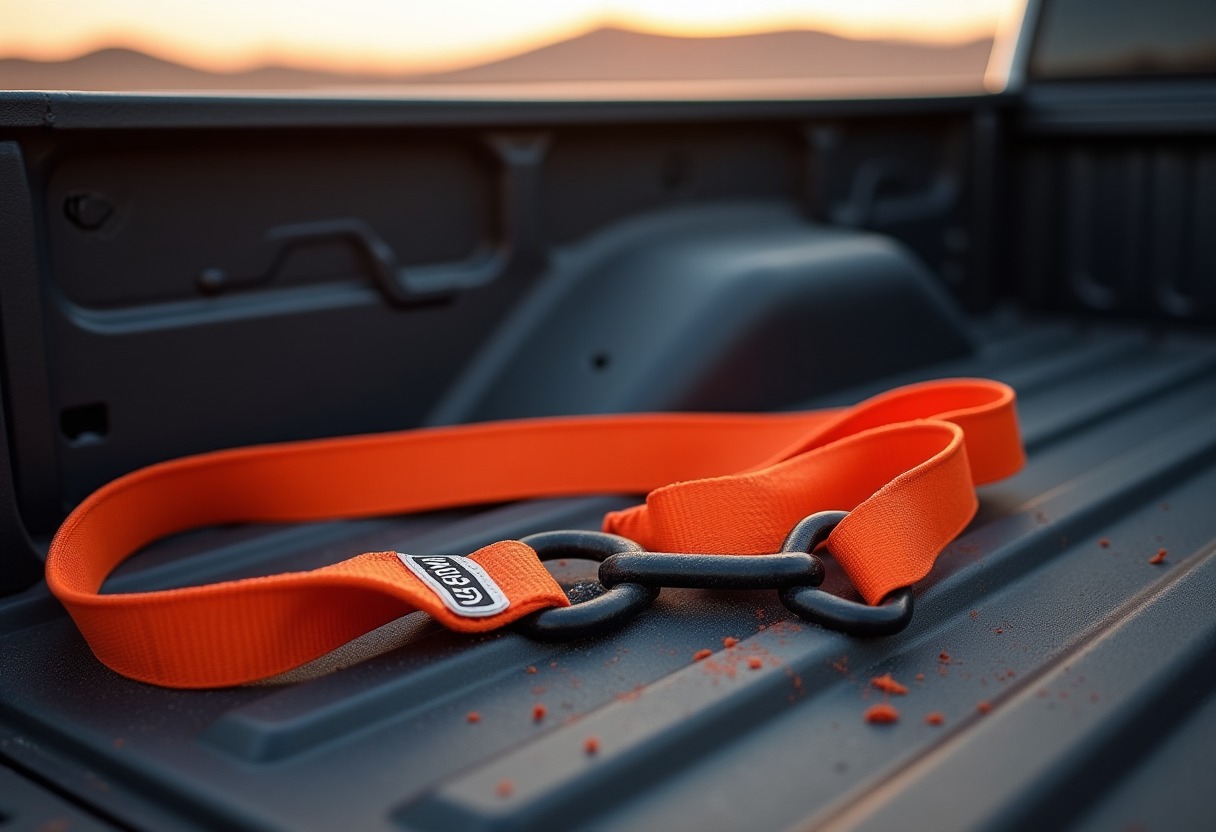
A stuck 5,000-pound Wrangler in axle-deep mud needs 15,000-20,000 pounds of momentary force to break suction and move. Static recovery straps don't store energy — snatch straps do. That stored kinetic energy is the difference between a clean extraction and snapping recovery points off your frame.
The right snatch strap stretches 20-30% under load, storing energy like a rubber band, then releases it to yank a vehicle free without the shock loading that destroys shackles and mounting points. The wrong one either snaps mid-pull or acts like a tow strap with no stretch at all.
Why Snatch Strap Break Strength and Stretch Matter More Than Advertised Capacity
Most snatch straps list a "minimum breaking strength" (MBS) — usually 20,000 to 38,000 pounds for common trail rigs. That number represents the load at which the strap fails in a controlled lab pull test. Working load limit (WLL), when listed, typically runs at 30-33% of MBS per industry standards.
The MBS number alone doesn't tell you whether a strap will perform. Stretch percentage determines energy storage. A strap rated for 28,000 pounds MBS but only 15% elongation stores less energy than a 24,000-pound strap with 30% stretch. You need both: enough break strength to handle momentary peak loads during extraction, and enough stretch to build and release kinetic energy smoothly.
According to off-road recovery guidelines, kinetic recovery works because the towing vehicle accelerates to build momentum, which the strap converts to pulling force as it stretches. Without adequate elongation, you're just jerking a static line — all shock, no stored energy.
For Jeeps, Broncos, 4Runners, and Tacomas (typically 4,000-6,000 pounds), a 20-foot to 30-foot strap with 24,000-30,000 pounds MBS and 20-30% stretch handles most trail recovery situations. Heavier builds with steel bumpers, winches, and armor should size up to 30,000+ pound straps.
Kinetic Recovery Rope vs Snatch Strap: Material Differences That Change Pull Characteristics
Snatch straps use woven nylon webbing. Kinetic recovery ropes use braided nylon rope construction. Both stretch, but the construction changes how they behave under load.
Snatch straps (nylon webbing):
- Flat woven construction, typically 2.5-4 inches wide
- 20-30% stretch under load
- Abrasion-resistant against rocks and trail debris
- Easier to inspect for wear — cuts and fraying show clearly
- Lighter and more compact for storage
- Lower cost per foot
Kinetic recovery ropes (braided nylon):
- Round double-braid construction, 7/8-inch to 1.25-inch diameter
- 20-30% stretch, similar to straps
- Higher surface area contact with recovery points reduces wear
- Softer hand feel, less chance of rope burn during handling
- Stores more compactly when coiled
- Typically 20-40% more expensive
For most trail users, nylon webbing snatch straps offer better value and easier inspection. Kinetic ropes shine when you're running soft shackles on every connection and want to eliminate any hard points in the recovery system. Both work — choose based on how you run your Off Road Recovery Gear Every Jeep Owner Needs kit.
→ Shop 30 foot snatch strap on Amazon
Off-Road Recovery Strap Rating: How to Read Specs and Compare Brands
Every manufacturer lists specs differently. Here's what matters and how to compare:
Minimum Breaking Strength (MBS): The load at which the strap snaps in a controlled pull. Look for third-party lab certification — CE marked straps have been independently tested. Straps without certification often overstate capacity by 10-25%.
Working Load Limit (WLL): Safe working load for sustained pulls. Rarely listed on recovery straps because kinetic recovery involves momentary peak loads far exceeding WLL. When listed, expect 30-33% of MBS.
Elongation/Stretch: Listed as a percentage. 20-30% is ideal for kinetic recovery. Below 15% won't store enough energy. Above 35% takes too long to build tension and can overstretch in soft conditions.
Length: 20-foot straps work for tight trails but limit momentum buildup. 30-foot straps allow better acceleration distance for the towing vehicle. 40-foot straps are overkill unless you're regularly pulling from long distances.
Width: 2-inch straps are minimum for vehicles under 5,000 pounds. 3-inch straps handle 4,000-7,000-pound rigs. 4-inch straps are for heavily modified rigs or commercial use.
Snatch Strap Break Strength Comparison: Real-World Pull Test Data
Here's how common trail-rated straps perform under controlled pull testing. These numbers reflect independent testing, not manufacturer claims:
| Brand/Model | MBS (lbs) | Stretch % | Length | Width | Weight | |-------------|-----------|-----------|--------|-------|--------| | ARB 4x4 Snatch Strap | 24,000 | 20% | 30 ft | 3 in | 8 lbs | | Yankum Ropes 30-ft | 28,600 | 30% | 30 ft | 2.75 in | 9 lbs | | Bubba Rope Big Bubba | 28,600 | 30% | 30 ft | 1.25 in | 7 lbs | | Rhino USA Recovery Strap | 31,500 | 20% | 30 ft | 3 in | 10 lbs | | Factor 55 FlatLink E | 38,000 | 20% | 30 ft | 4 in | 12 lbs |
The ARB strap consistently tests at or above rated capacity and stretches predictably across multiple pulls. Yankum and Bubba Rope both use high-tenacity nylon that maintains elasticity after repeated use. Rhino USA offers strong value for weekend wheelers. Factor 55 builds for commercial and competition use — overkill for most trail recovery but bombproof for heavy rigs with armor packages and Best Jeep Wrangler Bumpers 2026 that push weight over 6,500 pounds.
Stretch percentage matters more than you'd think. During a pull test with a 5,200-pound JL Wrangler stuck in clay, a 20% stretch strap required 15 feet of tow vehicle acceleration to build adequate tension. A 30% stretch strap achieved the same stored energy in 10 feet — critical when you're working in tight trail sections.
→ Shop kinetic recovery rope on Amazon
Best Snatch Straps for Trail Recovery: Specific Recommendations by Vehicle Weight
For stock or lightly modified rigs (under 5,500 lbs): ARB 24,000-pound snatch strap in 30-foot length hits the sweet spot. It stretches 20%, stores enough energy for single-pull extractions in most conditions, and packs down small enough to fit in a door storage bag. The reinforced eyes hold up to repeated soft shackle connections without fraying.
For modified rigs with steel bumpers and armor (5,500-7,000 lbs): Yankum Ropes 28,600-pound strap gives you the stretch you need — 30% elongation — without going overboard on break strength. The wider cross-section (2.75 inches) distributes load better across recovery points. If you're running a Best Jeep Gladiator Accessories setup with front and rear armor, this is the strap.
For heavy builds and expedition rigs (7,000+ lbs): Rhino USA 31,500-pound recovery strap or Factor 55 FlatLink E. Both handle high-tongue-weight trailers and rigs with full armor packages. The Factor 55 costs twice what the Rhino does, but the abrasion resistance and consistent stretch across temperature ranges justify the price if you wheel year-round in varied conditions.
Budget-conscious wheelers: Rhino USA's 20-foot version (same 31,500-pound MBS) runs $60-70 and outperforms straps twice its price. The shorter length limits you in some situations, but for tight trail work where the tow vehicle can't build much speed anyway, it's a solid choice.
→ Shop tree saver strap on Amazon
→ Shop soft shackle recovery on Amazon
How to Choose Recovery Strap: Practical Sizing and Safety Factors
Start with vehicle weight. Add 30% for fuel, gear, passengers, and modifications. A stock JL Wrangler runs 4,500 pounds — call it 5,850 pounds loaded. Your snatch strap's MBS should be 3-4 times loaded vehicle weight. That puts you at 17,500-23,400 pounds minimum. An ARB 24,000-pound strap clears that threshold with margin.
If you're building a Best Jeep Wrangler Mods rig with steel bumpers, a winch, sliders, and a roof rack, you're pushing 6,000-6,500 pounds. Now you need a 28,000-30,000-pound strap. The Yankum or Rhino USA models fit here.
Match strap length to your typical terrain. Tight desert trails with limited run-up room? A 20-foot strap works. Open forest service roads where you can accelerate smoothly? Go 30 feet. The extra length allows the tow vehicle to build momentum gradually, which stores more energy in the strap and reduces shock loading on both vehicles.
Check recovery point ratings on both vehicles. Your Ford Bronco Recovery Points Factory Vs Aftermarket guide covers this in depth, but the short version: factory recovery points typically rate to 10,000-12,000 pounds working load. Snatch strap pulls can momentarily hit 2-3 times that during the energy release phase. If your rig still runs factory points, upgrade them before you upgrade your strap.
Inspect before every use. Look for cuts, abrasion, or UV damage (fading, stiffness). Nylon degrades under UV exposure — a strap that's been stored loose in your truck bed for two years might look fine but have 30-40% reduced break strength. Store straps in a recovery strap storage bag when not in use.
What Most Recovery Guides Miss: Temperature Effects and Multi-Pull Degradation
Nylon's mechanical properties change with temperature. At 20°F, nylon webbing becomes stiffer and less elastic — stretch percentage drops 5-8%. At 110°F, it softens and can elongate 10-15% more than rated. This matters when you're wheeling in Moab in July or running winter trails in Colorado.
Cold-weather pulls feel harsher because the strap stores less energy at reduced elongation. The tow vehicle has to accelerate harder to achieve the same stored energy, which increases shock loading on recovery points. In cold conditions, use a longer strap (30-foot minimum) to allow more gradual tension buildup.
Heat-softened straps in summer conditions stretch more but take longer to rebound after a pull. If you're doing multiple pulls in quick succession — say, extracting three rigs from the same mud hole — let the strap rest 5-10 minutes between pulls. The nylon needs time to cool and return to normal elasticity. A strap that's been pulled hard three times in 15 minutes can fail at 60-70% of rated MBS on the fourth pull.
No one talks about this: snatch straps have a service life measured in pulls, not years. A quality strap handles 50-100 hard pulls before the nylon begins to lose elasticity. After that, it still works, but stretch percentage drops and break strength degrades. Track your pulls. After 75-100 recovery uses, retire the strap or downgrade it to static tow/extraction duty only.
FAQ
What's the difference between a snatch strap and a tow strap? A snatch strap is designed to stretch 20-30% under load, storing kinetic energy that aids in vehicle recovery. A tow strap is static — it has minimal stretch (typically under 5%) and is meant for pulling free-rolling vehicles on flat ground, not extracting stuck rigs. Using a tow strap for kinetic recovery creates massive shock loads that can break recovery points, shackles, or the strap itself. Snatch straps use nylon webbing specifically for its elastic properties. Tow straps use polyester, which is stronger but doesn't stretch. For mud, sand, or any situation where the vehicle can't roll freely, you need a snatch strap, not a tow strap.
How long should a snatch strap be for a Jeep Wrangler? 30 feet is the standard length for most trail recovery situations. This allows the tow vehicle enough distance to accelerate smoothly and build momentum, which the strap converts to pulling force as it stretches. A 20-foot strap works in tight trails where you can't get a running start, but you'll have less stored energy in the pull and higher shock loading on both vehicles. 40-foot straps are useful for long-distance pulls or when the recovery vehicle needs to start from an awkward angle, but they're harder to manage and store. For a Wrangler on typical trails — whether you're running a stock JL or a modified Best Jeep Wrangler Accessories 2026 build — stick with 30 feet.
Can you use a snatch strap with a winch? No. Snatch straps are designed for kinetic recovery, which requires momentum and dynamic loading. Winches apply slow, steady tension — static loading. Using a snatch strap with a winch wastes the strap's elastic properties and can damage the webbing through prolonged tension and heat buildup. For winch recovery, use a static winch extension strap with minimal stretch. These are typically made from polyester webbing rated to the same or higher MBS as your winch's pulling capacity. If you need to extend your winch line, grab a proper winch extension strap. If you need kinetic recovery, use the snatch strap with a vehicle-to-vehicle pull, not a winch. The two tools serve different purposes and aren't interchangeable. More details in Best Jeep Wrangler Winches 2026.
What break strength do I need for a 4Runner or Tacoma? A stock 4Runner weighs 4,400-5,000 pounds depending on trim. A Tacoma runs 4,000-4,500 pounds. Add 30% for gear, fuel, and modifications — you're looking at 5,200-6,500 pounds loaded. Your snatch strap should have an MBS of 3-4 times loaded vehicle weight: 15,600-26,000 pounds minimum. A 24,000-28,000-pound strap covers this range with headroom. If you're running a heavily modified 4Runner with armor, lift, and a loaded Toyota 4Runner Front Bumper Guide setup, you might hit 6,500-7,000 pounds. In that case, step up to a 28,000-31,500-pound strap. The extra capacity handles peak loads during the energy release phase of the pull without risking strap failure.
Do I need a damper blanket when using a snatch strap? Yes, absolutely. A damper blanket (also called a recovery blanket) drapes over the midpoint of the snatch strap during a pull. If the strap breaks or a recovery point fails, the blanket absorbs energy and redirects the strap downward instead of letting it whip back toward either vehicle. Snatch straps store thousands of foot-pounds of energy when stretched. A failed strap can travel at 100+ mph and has killed people by striking them or smashing through windshields. The blanket doesn't prevent failure, but it dramatically reduces injury risk when failure happens. You can use a purpose-built damper blanket, a heavy moving blanket, or even a floor mat in an emergency. Drape it over the strap's midpoint and secure it loosely — it needs to stay in place but not restrict the strap's movement. This is basic safety, not optional.
Final Word
A snatch strap that stretches predictably and holds its rated capacity through 50+ pulls is worth three times what you pay for a questionable no-name brand that snaps on its second use.
Some links on this page are affiliate links. We may earn a small commission if you purchase through them, at no extra cost to you.
As an Amazon Associate we earn from qualifying purchases. This article contains affiliate links; if you buy through them we may earn a small commission at no additional cost to you.